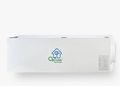
Clean air is essential in every indoor environment, but the requirements of a bedroom are very different from those of a hospital, office, school, or manufacturing facility. A residential unit may be selected for a single room, while a large building may require coordinated filtration, ventilation, and monitoring across several zones. Understanding these differences is the first step towards choosing effective room air cleaners and larger air-treatment solutions.
Why One Air-Cleaning Solution Does Not Fit Every Space
Indoor environments contain different pollutant sources. Homes may experience dust, pollen, cooking particles, smoke, and household odours. Offices can have high occupancy, cleaning-related emissions, and pollutants brought in from outside. Healthcare spaces may require carefully designed air-management strategies, while industrial facilities can face process-specific dust, fumes, vapours, or other contaminants.
The right solution depends on the nature of the pollutant, the amount generated, room dimensions, occupancy, ventilation, and the level of control required. A portable purifier may be useful in a bedroom or office, but it should not be assumed to replace a properly designed building ventilation or industrial extraction system.
Understanding HEPA Filtration
High-Efficiency Particulate Air filtration is widely used to capture airborne particles. A properly specified HEPA filter can capture at least 99.97% of particles measuring 0.3 microns under the relevant test conditions. This makes it useful for reducing many common airborne particles, including dust, pollen, and some smoke particles.
A HEPA air cleaners for home requirement should be assessed through the complete product specification. Buyers should check the filter classification, airflow, clean air delivery information, room coverage, and replacement-filter availability. A HEPA filter does not automatically remove gases, chemical vapours, or every type of odour. Those require suitable gas-phase treatment, such as activated carbon or other adsorption media.
Selecting Room Air Cleaners
When selecting room air cleaners, start with the size and use of the room. Floor area alone may not tell the whole story. Ceiling height, open doorways, connected spaces, occupancy, and pollution sources influence how much clean air is needed.
The clean air delivery rate, where provided, helps buyers compare particle-cleaning performance. A unit with insufficient airflow may struggle in a large room, even if its filter material is highly efficient. Noise is also important in bedrooms, meeting rooms, and classrooms. Consider performance at the fan speed that occupants are realistically willing to use.
Maintenance should be part of the decision. Filters need replacement according to their condition and the manufacturer’s guidance. Check whether replacement filters are available locally, how often they may need changing, and what the ongoing cost will be.
When Residential Purifiers Need More Than Particle Filtration
A home may contain several pollutant categories at once. Fine particles can enter from outside, while cooking and household products may release gases or odours. Moisture can contribute to mould-related concerns, and ventilation may vary between rooms.
An integrated purifier may combine particle filtration with gas adsorption and additional treatment technologies. Buyers should understand what each stage is designed to do and ask for relevant test documentation. Claims relating to bacteria, viruses, or other biological contaminants should be evaluated carefully, including the conditions under which the results were obtained.
The most effective household strategy also includes source control. Use kitchen exhaust systems, avoid indoor smoking, address dampness, and ventilate when outdoor air conditions are suitable.
Why Industrial Air Filtration Requires Engineering
An industrial air filtration system is designed around the processes and hazards present in a facility. Manufacturing operations may generate fine dust, welding fumes, oil mist, chemical vapours, or other airborne contaminants. The correct approach depends on the material, particle characteristics, temperature, concentration, and how the contaminant is released.
Industrial filtration may involve local exhaust ventilation, dust collectors, cartridge filters, bag filters, gas treatment, or combinations of technologies. Capturing a contaminant close to its source can be more effective than trying to clean the entire room after it has dispersed.
System design should consider airflow requirements, duct routing, pressure drop, filter loading, maintenance access, and safe handling of collected material. Certain processes may also require explosion protection, hazardous-area equipment, or specialist occupational hygiene assessment. These decisions should be made by qualified professionals familiar with the relevant standards and risks.
Monitoring and Performance Verification
Monitoring helps building managers understand whether air-treatment systems are operating as intended. Depending on the application, sensors may track particulate matter, VOCs, temperature, humidity, or other indicators. Industrial facilities may require additional process-specific monitoring and workplace exposure assessment.
Measurements should be interpreted in context. A consumer sensor is not necessarily a substitute for calibrated instruments or formal exposure testing. Facilities should define what needs to be measured, where measurements should be taken, and how the information will guide operational decisions.
After installation, performance should be checked against the design objectives. Filter condition, airflow, pressure drop, and system operation may need periodic review. A maintenance plan helps prevent gradual performance decline.
Planning for the Entire Life Cycle
A filtration system is a long-term operational investment. Initial equipment cost is only one part of the calculation. Energy use, filter replacement, service requirements, downtime, installation, and disposal can influence total ownership cost.
For homes, simple filter replacement and quiet operation may be priorities. For businesses, service access, reporting, scalability, and maintenance contracts may matter more. Industrial operators may also need spare parts planning and documented inspections to support operational continuity.
Making the Right Choice
When comparing HEPA air cleaners for home, focus on independently supported filtration performance, room suitability, and manageable maintenance. For larger facilities, an industrial air filtration system should be engineered around the actual pollutant source and process rather than selected as a generic room appliance.
Whether a project involves room air cleaners or a facility-wide industrial air filtration system, the best solution begins with a clear assessment of the environment and its requirements.
Conclusion
Air filtration works best when it is matched to the space, pollutant, and intended outcome. Residential purifiers, commercial systems, and industrial installations serve different purposes and require different levels of assessment. O2Cure provides air-purification solutions across residential, commercial, industrial, healthcare, education, and other environments, with an approach that considers the conditions of each space. Careful specification, suitable monitoring, and planned maintenance help make air-quality improvements more practical and sustainable over time.