
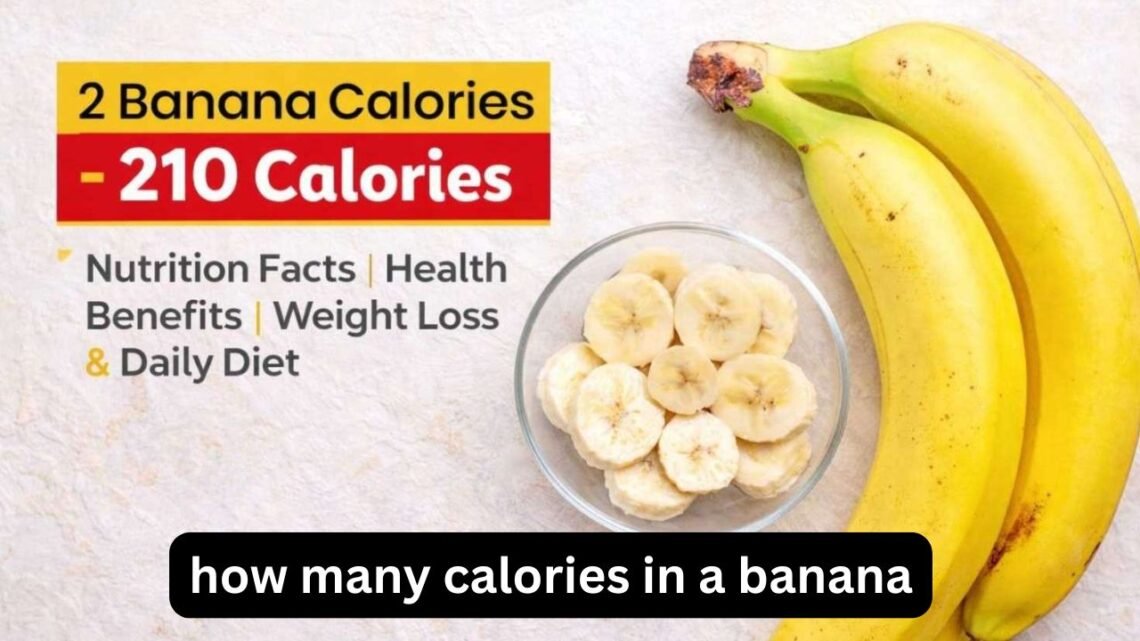
If you are counting calories, a banana can be surprisingly easy to misjudge. One person may call a small banana “one banana,” while another may eat a much larger fruit and log exactly the same amount. That is why the answer to how many calories in a banana depends mainly on its size and edible weight.
As a useful everyday estimate, a medium banana contains about 105 calories. A small banana is usually around 90 calories, while a large banana can provide roughly 120–135 calories. The banana itself is relatively straightforward; the bigger differences appear when it is combined with bread, peanut butter, milk, ice cream, chocolate or other ingredients.
This guide breaks down banana calories by size and explains popular combinations, including banana sandwiches, banana milkshakes, banana splits and banana with peanut butter. It also covers carbohydrates, natural sugar, portion control and a few practical calorie-counting tips that can make tracking much more accurate.
How Many Calories Are in a Banana?
A typical medium banana contains approximately 105 calories.
The exact number varies because bananas are not all the same size. A longer, heavier banana naturally contains more energy than a small one.
| Banana size | Approximate calories |
|---|---|
| Very small | 70–80 |
| Small | 85–95 |
| Medium | 100–110 |
| Large | 120–135 |
| Extra large | 135–150+ |
These figures are useful for everyday tracking rather than precise laboratory measurements.
The easiest rule to remember is:
One medium banana = about 105 calories.
If you are following a calorie-controlled diet, there is usually no need to worry about a difference of 5–10 calories between individual bananas. The much more important factor is consistency in how you estimate your portions.
How Many Calories in a Medium Banana?
A medium banana is generally around 105 calories, making it a relatively modest snack.
It also provides carbohydrates, natural sugars and fibre, along with nutrients such as potassium and vitamin B6.
For many people, a medium banana works well as:
- A quick breakfast addition
- A pre-workout snack
- A topping for porridge or cereal
- A simple afternoon snack
- An ingredient in smoothies
- A naturally sweet addition to yoghurt
One useful point about bananas is that their calorie content is largely determined by their edible weight, not simply how the fruit looks.
Two bananas may both be described as “medium,” but one could be noticeably heavier. If you need greater accuracy, weighing the peeled banana is more reliable than relying on the size label.
How Many Calories in a Banana UK?
In the UK, the calorie content of a banana is essentially the same as elsewhere because the fruit itself does not become more calorie-dense simply because it is sold in the UK.
A typical UK supermarket banana may contain approximately:
- Small banana: around 85–95 calories
- Medium banana: around 100–110 calories
- Large banana: around 120–135 calories
The exact figure depends on the banana’s weight.
This is particularly important when using calorie-counting apps. Some entries describe a banana by size, while others list calories per 100 grams. If your banana is unusually large, choosing a generic “medium banana” entry could underestimate your intake.
For everyday UK calorie tracking, around 100–110 calories for a medium banana is a sensible estimate.
Banana Calories by Weight
If you want a more accurate method, weight is often better than size.
Banana flesh provides roughly 89 calories per 100 grams. This means you can estimate the calories of a peeled banana using its edible weight.
For example:
- 80 g banana ≈ 71 calories
- 100 g banana ≈ 89 calories
- 120 g banana ≈ 107 calories
- 150 g banana ≈ 134 calories
This approach is particularly useful if you are carefully tracking your daily energy intake.
A practical calorie-counting trick
If you regularly eat bananas, weigh one peeled banana once or twice and compare its weight with the size listed in your food-tracking app. After doing this, you will have a much better idea of what “small,” “medium” and “large” mean in your own kitchen.
That is more useful than assuming every supermarket banana has the same calorie count.
How Many Calories in a Banana Sandwich?
A banana sandwich can range from a fairly light snack to a surprisingly high-calorie meal.
The banana itself might contribute about 90–110 calories. The bread and spreads determine most of the additional calories.
For example, a simple sandwich made with:
- 1 medium banana: ~105 calories
- 2 slices of standard bread: ~140–200 calories
could contain roughly 245–305 calories.
Add peanut butter and the total can rise considerably.
A banana sandwich with two slices of bread and two tablespoons of peanut butter may easily reach 400–500 calories, depending on the bread and the amount of peanut butter used.
This illustrates an important point: when people are trying to reduce calories, the banana is often not the part that needs the most attention. Spreads, sauces and portion sizes can contribute substantially more energy.
How Many Calories in a Banana and Peanut Butter?
A medium banana contains about 105 calories, while peanut butter is much more calorie-dense.
Approximately two tablespoons of peanut butter can provide around 180–200 calories.
Therefore:
1 medium banana + 2 tablespoons peanut butter = roughly 285–305 calories.
This combination can be filling because it provides carbohydrates from the banana along with fat and protein from peanut butter.
However, peanut butter is very easy to underestimate.
A “spoonful” at home can mean anything from a small teaspoon to a large heaped tablespoon. If calorie tracking matters to you, measuring peanut butter for a few days can be eye-opening.
How to make it lighter
If you enjoy banana with peanut butter but want fewer calories, try:
- Use half a banana with one tablespoon of peanut butter.
- Spread a thin layer of peanut butter instead of using a large spoonful.
- Use banana slices over whole-grain toast.
- Add cinnamon for flavour without significantly increasing calories.
The goal does not have to be eliminating calorie-dense foods. Often, controlling the portion gives you the same enjoyment for considerably fewer calories.
How Many Calories in a Banana Milkshake?
A banana milkshake can contain considerably more calories than a plain banana because milk, sugar, ice cream and other ingredients are added.
A simple homemade milkshake made with:
- 1 medium banana: ~105 calories
- 250 ml semi-skimmed milk: roughly 115 calories
would provide approximately 220 calories before adding sugar, syrup or ice cream.
A richer milkshake may contain 300–500 calories or more, particularly if it includes ice cream, full-fat milk, whipped cream or flavoured syrups.
Why milkshakes vary so much
Consider two drinks that are both called “banana milkshakes.”
Simple version: banana + milk
→ roughly 200–250 calories
Dessert-style version: banana + full-fat milk + ice cream + syrup
→ potentially 400–600+ calories
The banana is the same in both. The difference comes from everything added around it.
If you are making one at home, you have much more control over the final calorie count.
How Many Calories in a Banana Split?
A banana split is very different from eating a banana on its own.
A classic banana split typically contains:
- A banana
- Several scoops of ice cream
- Chocolate or other syrup
- Whipped cream
- Nuts
- Sometimes a cherry or other toppings
Depending on the portions and ingredients, a banana split can contain 500–800 calories or more.
The important takeaway is that most of the extra calories come from ice cream, sauces, nuts and whipped cream rather than from the banana itself.
A banana split can therefore be better thought of as a dessert containing a banana, rather than as a “banana snack.”
Does a Ripe Banana Have More Calories?
This is a common source of confusion.
As a banana ripens, its starches gradually convert into simpler sugars. That changes its taste and texture, making a ripe banana sweeter and softer.
However, ripening does not suddenly transform the banana into a dramatically higher-calorie food.
A ripe banana and a less-ripe banana of the same weight contain broadly similar amounts of energy. What changes most noticeably is the type and availability of carbohydrates and the eating experience.
So if you prefer very ripe bananas, you do not need to avoid them simply because they taste sweeter.
Are Bananas High in Sugar?
A medium banana contains roughly 14 grams of naturally occurring sugar, although the exact amount varies with size and ripeness.
That does not make it equivalent to eating the same amount of added sugar from sweets or sugary drinks.
A banana also provides fibre and nutrients and has a solid amount of carbohydrate that can be useful for energy.
The more useful question is not simply “Does a banana contain sugar?” It is:
How does the banana fit into your overall diet?
For most people, a whole banana can easily fit into a balanced eating pattern.
Banana Calories vs Other Common Snacks
A medium banana provides around 105 calories, which makes it relatively easy to fit into a snack.
For comparison, calorie counts can rise quickly with foods containing large amounts of added fat or sugar.
A banana may therefore be a practical option when you want something naturally sweet without turning a snack into a large dessert.
However, calories are not the only consideration. Satiety, protein, fibre, overall nutrition and your personal energy requirements all matter.
For example, someone preparing for exercise may deliberately combine a banana with yoghurt or peanut butter rather than eating the fruit alone.
Three Banana-Calorie Insights People Often Miss
1. The peel should not determine your calorie estimate
Food databases can create confusion because banana weights sometimes refer to the fruit with the peel attached.
You do not eat most of the peel, so weighing the peeled fruit gives you a more useful number when precision matters.
2. The toppings can matter more than the banana
If you are eating a banana with peanut butter, cereal, chocolate or ice cream, focusing only on the banana’s calories misses the bigger picture.
For example, changing from one tablespoon of peanut butter to two can add roughly another 90–100 calories, while the banana itself has not changed at all.
3. “Healthy” does not automatically mean “low calorie”
Bananas are nutritious, but they still contain calories. Peanut butter, nuts and oats can also be nutritious while being energy-dense.
This is why portion size matters even when the individual foods are wholesome.
Common Mistakes When Counting Banana Calories
Assuming every banana contains 105 calories
105 calories is a useful estimate for a medium banana, not a universal number.
A very small banana and a very large banana can differ substantially.
Forgetting the other ingredients
A banana smoothie may sound healthy, but milk, nut butter, honey, dates, oats and other ingredients can quickly increase its energy content.
Measuring by spoon instead of weight
This is especially relevant to peanut butter. A heaped tablespoon can contain considerably more than a level tablespoon.
Avoiding bananas because they are “too sugary”
For most people, there is no need to fear the natural sugar in a whole banana. The overall diet and portion are more important than treating one food as inherently good or bad.
How to Include Bananas Without Overdoing Calories
If you enjoy bananas and are watching your calorie intake, simple adjustments can make a difference.
For a light snack:
Eat a small banana on its own.
For a more filling snack:
Combine a banana with Greek yoghurt or another protein-rich food.
For breakfast:
Slice half or one banana over porridge, depending on your overall portion.
For a banana sandwich:
Use a moderate amount of peanut butter and choose bread that fits your dietary needs.
For a milkshake:
Blend banana with milk and ice rather than automatically adding ice cream and syrup.
For dessert:
Use banana with yoghurt and cinnamon when you want something sweet without turning it into a large dessert.
FAQ
How many calories are in one medium banana?
A medium banana contains approximately 105 calories. The actual amount depends on its edible weight, so a particularly small or large banana may contain significantly fewer or more calories. For everyday calorie tracking, 100–110 calories is a practical estimate.
How many calories are in a banana in the UK?
A typical UK banana contains roughly 85–135 calories depending on its size. A medium banana is generally around 100–110 calories. The country where the banana is purchased does not materially change its calorie content; size and weight are what matter.
How many calories are in a banana sandwich?
A basic banana sandwich made with one medium banana and two slices of bread may contain approximately 245–305 calories. Adding peanut butter, butter, honey or other spreads can increase the total substantially. The exact amount depends mainly on the bread and portion sizes.
How many calories are in a banana milkshake?
A homemade banana milkshake containing one medium banana and around 250 ml of milk may provide approximately 220 calories before additional ingredients. Ice cream, sugar, syrup and whipped cream can raise the total to 300–500 calories or more.
How many calories are in a banana split?
A banana split can contain approximately 500–800 calories or more, depending on the amount of ice cream, sauces, whipped cream and nuts. The banana itself contributes only a relatively small portion of the total. Dessert toppings are responsible for much of the calorie difference.
How many calories are in banana and peanut butter?
A medium banana contains about 105 calories, while two tablespoons of peanut butter typically add around 180–200 calories. Together, they provide roughly 285–305 calories. Reducing the peanut butter portion is one of the easiest ways to lower the total without removing the banana.
Final Takeaway
For a simple answer, one medium banana contains about 105 calories. Smaller bananas may provide around 85–95 calories, while large bananas can exceed 120 calories.
The most accurate way to estimate your intake is to think about weight rather than labels such as small, medium or large. Around 100 grams of edible banana provides roughly 89 calories.
More importantly, the banana itself is rarely the biggest source of calories in popular banana-based foods. Bread and peanut butter can significantly increase the calories in a banana sandwich, while milk, ice cream, syrup and whipped cream can turn a simple banana into a much larger dessert.
So there is no need to treat bananas as a food to fear. Whether you are counting calories, preparing for exercise or simply trying to eat more mindfully, the practical approach is to consider the portion and the complete meal—not just one ingredient.


