
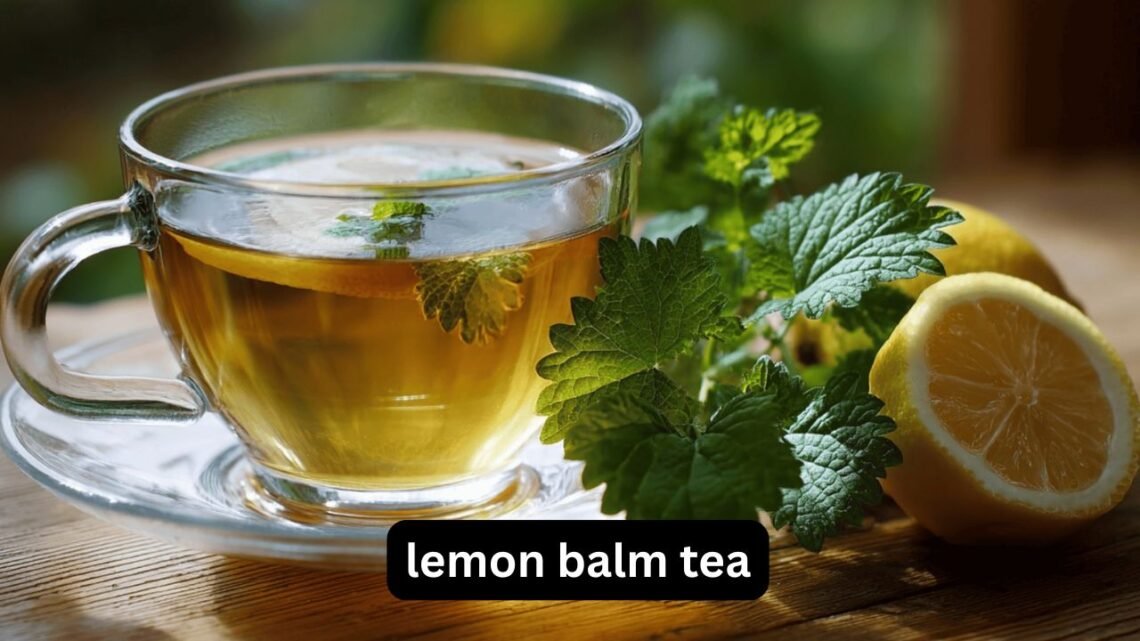
When you want something warm before bed but do not want caffeine, lemon balm tea is an appealing option. It has a naturally mild, lemony flavor and has traditionally been used as a calming herbal drink. But how much of its reputation for relaxation, sleep, digestion, and mood is actually supported by evidence?
This guide explains what lemon balm tea can realistically offer, how to prepare it from fresh or dried leaves, what to look for in lemon balm tea bags, and what to know about products such as those sold by Holland & Barrett. It also separates traditional uses from findings from clinical research, because a cup of herbal tea is not necessarily equivalent to the concentrated extracts used in studies.
Lemon balm is the common name for Melissa officinalis. The European Medicines Agency recognizes its traditional use for mild symptoms of stress, helping with sleep, and mild digestive complaints such as bloating and flatulence. However, the agency also notes that clinical evidence is not strong enough to treat these uses as firmly established medical effects.
What Is Lemon Balm Tea?
Lemon balm tea is an infusion made from the leaves of Melissa officinalis, a member of the mint family.
Despite its name, it is not a tea made from lemons. It contains no actual tea leaves unless another ingredient has been added. That means a pure lemon balm infusion is naturally caffeine-free.
The fresh leaves have a soft citrus-like aroma, while dried lemon balm tends to produce a gentler herbal flavor. Depending on the brand or recipe, the tea may also be blended with peppermint, chamomile, ginger, or other herbs.
One important distinction is often overlooked:
Lemon balm tea, lemon balm extract, and lemon balm supplements are not interchangeable.
Research studies may use standardized extracts or specific quantities of dried leaf, whereas an ordinary tea bag can contain a different amount and concentration of plant material. Therefore, results from a supplement study should not automatically be interpreted as proof that one cup of tea will produce the same effect.
Lemon Balm Tea Benefits: What Does It Actually Do?
The potential benefits of lemon balm tea are mainly associated with relaxation, sleep, and mild digestive discomfort.
1. It may help you feel calmer
Lemon balm has traditionally been used for mild stress, and some clinical research suggests that it may have calming effects.
A systematic review and meta-analysis of randomized clinical trials found improvements in anxiety and depression scores compared with placebo, although the researchers emphasized that the studies were relatively few and varied considerably in their methods.
That makes it more accurate to say that lemon balm may support relaxation rather than claiming that it treats anxiety disorders.
For example, someone who feels mentally “switched on” after a busy day may find a warm, caffeine-free lemon balm drink useful as part of a relaxing evening routine.
2. It may support sleep
Sleep is another reason people reach for lemon balm.
The European Medicines Agency recognizes the traditional use of melissa leaf to aid sleep. However, it describes the evidence as traditional rather than sufficient clinical proof of a definitive treatment effect.
More recent research reviews have also reported promising findings for sleep quality, sleep duration, and related measures, but differences in preparation, dose, study length, and participants make the results difficult to translate into a precise recommendation for tea.
A practical way to use it is therefore as a pre-bed ritual, rather than treating it like a sleeping medication.
3. It may be useful for mild digestive discomfort
Traditionally, lemon balm has also been used for mild digestive complaints, particularly bloating and flatulence.
The EMA specifically lists mild gastrointestinal complaints among the traditional uses of melissa leaf.
If you are drinking it after a meal, keep the preparation simple. Adding large amounts of sugar or rich cream can turn a light herbal drink into something much less suitable as an everyday digestive beverage.
4. It provides a caffeine-free alternative
This is one of the simplest benefits.
Pure lemon balm tea does not naturally contain caffeine. For people who are sensitive to caffeine or who want to avoid coffee, black tea, or green tea in the evening, it can be an easy replacement.
Just check the ingredient label. A product marketed as “lemon balm tea” may contain other herbs or ingredients, and some blends may include caffeinated tea leaves.
5. It contains naturally occurring plant compounds
Lemon balm contains compounds including rosmarinic acid and various volatile constituents. Research has investigated these compounds for antioxidant, neurological, and other biological activities.
However, laboratory activity should not automatically be presented as a proven human health benefit. The amount and chemical profile can also vary according to the plant material and extraction method.
How to Make Lemon Balm Tea
Making lemon balm tea at home is straightforward.
Simple lemon balm tea recipe
You need:
- 1–2 teaspoons dried lemon balm leaves, or a small handful of fresh leaves
- 1 cup of freshly boiled water
- Honey, lemon, or another sweetener if desired
Method:
- Put the lemon balm into a cup or teapot.
- Pour over freshly boiled water.
- Cover and steep for about 5–10 minutes.
- Strain the leaves.
- Taste before adding anything else.
- Add a little honey if you prefer a sweeter drink.
Covering the cup while the leaves steep is a useful practical trick. It helps keep the aromatic compounds from escaping as readily with the steam.
Fresh vs dried lemon balm
| Fresh leaves | Dried leaves |
|---|---|
| Brighter, fresher aroma | More concentrated herbal flavor |
| Good if you grow lemon balm | Convenient for regular use |
| Requires more plant material | Easy to measure |
| Shorter storage life | Stores much longer when kept dry |
If your first cup tastes weak, do not immediately assume that lemon balm does not suit you. Leaf quality, age, storage, water temperature, and steeping time can all affect the final flavor.
Are Lemon Balm Tea Bags Worth Using?
Lemon balm tea bags are probably the easiest option for everyday use.
They eliminate measuring and straining, which makes them particularly convenient for an evening routine.
When choosing tea bags, look at the ingredient list rather than the front of the box. Check whether the product contains:
- Pure lemon balm
- A lemon balm and chamomile blend
- Lemon balm with peppermint
- Added flavoring
- Caffeine-containing tea leaves
- Sweeteners or other ingredients
Another useful point is that tea bags can differ substantially in their amount of herbal material. Two products can both be called lemon balm tea while producing noticeably different flavors.
For a first purchase, a simple ingredient list makes it easier to understand how your body responds to the herb.
What About Lemon Balm Tea From Holland & Barrett?
Holland & Barrett is one of the retailers people may encounter when searching for lemon balm tea, but the exact products, formulations, pack sizes, and availability can change.
Rather than assuming every product sold under the retailer’s name has identical ingredients, check the current packaging and product information before buying.
This matters because a single-herb lemon balm tea is different from a relaxing herbal blend that happens to contain lemon balm.
If your purpose is specifically to see how lemon balm tastes or fits into your routine, choosing a product where lemon balm is clearly identified as a principal ingredient makes the experience easier to evaluate.
Lemon Balm Tea Side Effects: Is It Safe?
For most adults, ordinary food and tea use of lemon balm is generally considered low risk, but “natural” does not mean automatically risk-free.
The EMA’s assessment found no major safety signal associated with traditional melissa-leaf preparations, although clinical evidence and reporting are limited. Its assessment also notes that safety during pregnancy and breastfeeding has not been established.
Possible issues to consider include:
- Individual sensitivity or allergy
- Stomach discomfort in some people
- Drowsiness or increased relaxation, particularly when combined with other sedating substances
- Potential concerns when taking medicines, because evidence about interactions is limited
A particularly important distinction is between tea and concentrated extracts. Studies involving capsules or standardized extracts may use quantities that are quite different from a normal cup of tea.
Who should be more cautious?
Speak with a doctor or pharmacist before using lemon balm medicinally if you:
- Are pregnant or breastfeeding
- Give it to a child
- Take prescription medicines regularly
- Have a significant medical condition
- Plan to use concentrated lemon balm supplements rather than ordinary tea
The EMA recommends melissa-leaf medicinal products for adults and children over 12 in the traditional indications it evaluated and advises medical advice if symptoms persist for two weeks.
A Common Mistake: Assuming More Is Better
One of the least useful habits with herbal products is assuming that a stronger preparation must be more effective.
It is tempting to use several tea bags, steep the tea for an unusually long time, and then drink multiple cups because the herb is “natural.” There is not enough evidence to establish that this produces better results.
A better approach is to start with a normal preparation and pay attention to how you personally respond.
This is especially important because research often uses standardized preparations that cannot be directly compared with homemade tea.
Lemon Balm Tea vs Other Evening Drinks
If your main goal is relaxation, the choice is not simply “lemon balm or nothing.”
Lemon balm tea vs chamomile tea
Chamomile is another popular caffeine-free bedtime drink. Lemon balm has a more noticeable citrus-mint character, while chamomile is typically softer and more floral.
Neither should automatically be considered a treatment for insomnia simply because people traditionally drink them before bed.
Lemon balm tea vs green tea
Green tea naturally contains caffeine, although the amount varies. Lemon balm is naturally caffeine-free, making it more suitable for people specifically trying to avoid caffeine at night.
Lemon balm tea vs lemon water
Lemon water provides the taste and hydration associated with lemon but does not contain the characteristic plant compounds found in Melissa officinalis.
They are simply different drinks.
Three Useful Insights People Often Miss
1. The preparation matters
A tea bag, homemade infusion, tincture, capsule, and standardized extract can all contain lemon balm but deliver very different amounts and chemical profiles.
So when reading a study about lemon balm, always ask: What preparation did researchers actually test?
2. The ritual may be part of the practical benefit
If someone drinks lemon balm tea every night while reducing screen use, dimming the lights, and following a consistent bedtime, the tea becomes part of a larger sleep routine.
That does not prove the tea alone caused better sleep. But it explains why a simple herbal drink can still have practical value even when clinical evidence is not definitive.
3. “Calming” does not mean “treatment”
Research suggests potentially useful effects on mild stress, anxiety-related symptoms, and sleep, but the evidence is not strong enough to turn lemon balm tea into a substitute for professional treatment.
A relaxing cup can be part of self-care without being marketed as a cure.
Common Mistakes When Making Lemon Balm Tea
Avoid these simple problems:
- Using boiling water for too long: Extremely prolonged steeping can make the drink unpleasantly strong.
- Adding too much sweetener: This can overwhelm the delicate herbal flavor.
- Confusing lemon balm with lemongrass: They are different plants.
- Ignoring the ingredients: Blended teas may contain other herbs or caffeine.
- Treating supplements and tea as equivalent: Their concentrations can be very different.
- Expecting immediate medical results: Traditional herbal use and clinical treatment are not the same thing.
Frequently Asked Questions
What are the main lemon balm tea benefits?
The main traditional uses are relaxation during mild stress, support for sleep, and relief of mild digestive complaints such as bloating and flatulence. Clinical research has produced promising findings for anxiety and sleep-related outcomes, but the evidence remains limited and inconsistent.
How do you make lemon balm tea?
Steep about 1–2 teaspoons of dried lemon balm leaves, or a small handful of fresh leaves, in a cup of freshly boiled water for roughly 5–10 minutes. Covering the cup during steeping can help retain the herb’s aroma. Strain before drinking and add honey only if you want extra sweetness.
Can you drink lemon balm tea before bed?
Yes, lemon balm is traditionally used as an evening herbal drink and the EMA recognizes its traditional use as an aid to sleep. Research also suggests possible improvements in some sleep measures, although studies have used different preparations and doses.
Are there lemon balm tea side effects?
Lemon balm appears to have a generally favorable safety profile when used traditionally, but safety data are not comprehensive. Extra caution is appropriate during pregnancy and breastfeeding, in children, and when taking medicines because interaction data are limited.
Is lemon balm tea caffeine-free?
Pure lemon balm tea is naturally caffeine-free because lemon balm is an herb rather than a tea-leaf variety such as black or green tea. However, check the ingredients of packaged blends because some products combine lemon balm with other caffeinated tea leaves.
Is lemon balm tea the same as lemon balm extract?
No. Tea is usually a relatively dilute water infusion, while extracts and supplements can concentrate particular compounds from the plant. Evidence from studies using standardized extracts therefore cannot automatically be applied to an ordinary cup of lemon balm tea.
Conclusion
Lemon balm tea is a simple caffeine-free herbal drink with a long history of traditional use. Its most relevant uses are relaxation, bedtime routines, and mild digestive comfort, while clinical research provides promising—but not conclusive—evidence for some effects on stress, anxiety, mood, and sleep.
For everyday use, a straightforward preparation is usually all you need: fresh or dried lemon balm, hot water, and a few minutes of steeping. If you are considering concentrated supplements, taking medication, pregnant or breastfeeding, or using lemon balm for persistent symptoms, it is sensible to get professional advice rather than relying on tea alone.
The biggest practical takeaway is simple: enjoy lemon balm tea as a calming herbal beverage and part of a healthy routine, while keeping its potential health benefits in perspective.