
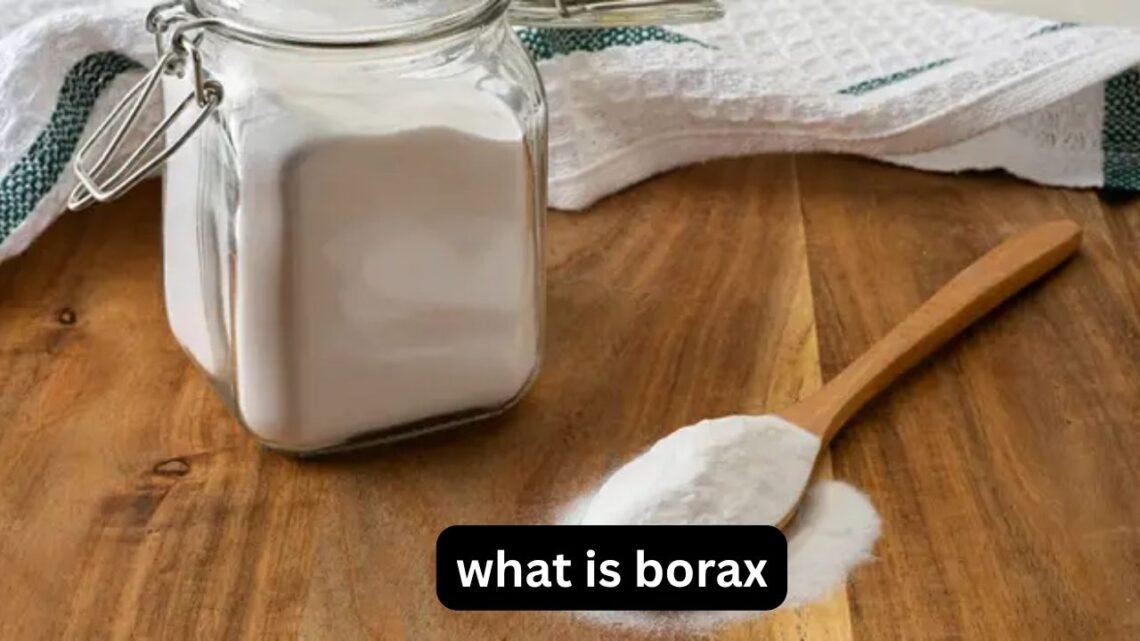
If you have come across a recipe for homemade slime, a cleaning tip, or an old-fashioned household remedy mentioning borax, you may have wondered what it actually is—and whether the product sold in the UK is the same thing. The confusion is understandable because borax has several names, comes in different forms, and is sometimes confused with boric acid or ordinary washing soda.
So, what is borax? Borax is a naturally occurring boron-containing mineral and a sodium salt commonly known as sodium tetraborate. The form most people mean when they say borax powder is sodium tetraborate decahydrate.
This guide explains what borax powder is, what it is called in the UK and England, what it has traditionally been used for, why it appears in slime recipes, and what to know before looking for a borax substitute in the UK. Most importantly, it separates genuine household uses from outdated advice that can lead to unnecessary chemical exposure.
What Is Borax?
Borax is a borate mineral and sodium salt. The common hydrated form is called sodium tetraborate decahydrate, with the chemical formula Na₂B₄O₇·10H₂O. PubChem lists borax, borax decahydrate and sodium borate decahydrate among its names.
In its usual powder form, borax is a white crystalline material. It dissolves in water and produces an alkaline solution.
The word “borax” is therefore not simply another name for baking soda or washing powder. It describes a particular boron-containing chemical.
A useful way to think about it is:
- Borax = commonly sodium tetraborate
- Borax powder = powdered borax, often the decahydrate form
- Sodium tetraborate = chemical name commonly associated with borax
- Boric acid = a different boron compound
- Washing soda = sodium carbonate, also different from borax
That distinction matters when following an old recipe, because substituting one chemical for another can change the result considerably.
What Is Borax Powder?
Borax powder is simply borax supplied in a powdered or finely crystalline form. It is not a special new chemical.
Borax can exist in different chemical forms, including anhydrous sodium tetraborate and hydrated forms. The decahydrate form contains water incorporated into its crystal structure, which is why its molecular weight differs from anhydrous sodium tetraborate.
For everyday consumers, the important point is to check the product label rather than assuming that every white powder called “borax” has identical specifications.
Look for information such as:
- Chemical name
- CAS number
- Concentration or purity
- Intended use
- Hazard classification
- Safety instructions
This is particularly important if you are buying a chemical product for a specific craft, cleaning or laboratory application.
What does borax powder look like?
Typical borax is:
- White or colourless
- Crystalline
- Powdered or granular
- Alkaline
- Water-soluble, although its solubility depends on temperature and formulation
The Food Standards Agency’s regulated-products database also describes sodium tetraborate as a powder or glass-like material that is slowly soluble in water.
What Is Borax Called in the UK?
In the UK, borax may be labelled borax, sodium tetraborate, sodium borate, or sodium tetraborate decahydrate, depending on the product and formulation.
So if you search for “what is borax called in the UK?” there is no completely different British chemical name that replaces borax.
You may encounter terms such as:
Borax → Sodium tetraborate → Sodium borate
However, don’t assume that boric acid is the same product. It isn’t.
This is one of the most useful distinctions to remember when shopping for a substitute or trying to reproduce an old recipe.
What Is Borax Used For?
Historically, borax has had a surprisingly wide range of applications. Its chemical properties make it useful in areas such as cleaning, manufacturing, metallurgy, ceramics and some specialised industrial processes.
Commonly discussed uses include:
1. Cleaning applications
Borax has traditionally been used as an alkaline cleaning ingredient and water-softening aid. Its chemistry can help cleaning formulations work more effectively under certain conditions.
However, an old cleaning recipe is not automatically a recommendation for modern household use. Today’s commercial cleaning products are usually formulated and labelled for specific applications, which makes following the manufacturer’s directions the safer approach.
2. Laundry
Historically, borax was added to laundry mixtures because its alkalinity could support cleaning and help with hard-water conditions.
This is one reason you may find references to borax in older housekeeping books.
It does not, however, mean that you should automatically add loose borax to every modern washing-machine load.
3. Ceramics and glass
Boron compounds have important industrial uses in glass and ceramic manufacturing. Borax can act as a source of boron and contribute to the behaviour of materials during heating.
This is very different from using household borax as a cleaning product.
4. Metalworking
Borax has long been associated with certain metalworking and brazing processes, where borate materials can act as fluxes.
The exact product specification matters here, so industrial or workshop users should use a product intended for that particular application rather than assuming ordinary household powder is interchangeable.
5. Slime and crafts
Borax became particularly well known among children and craft enthusiasts because borate solutions can interact with polymers such as polyvinyl alcohol (PVA).
That brings us to one of the most frequently searched questions about borax.
What Is Borax Used For in Slime?
Borax is used in some slime recipes because borate ions can help link polymer chains together.
In a typical PVA-based slime, the polymer molecules initially move relatively freely through the mixture. Borate chemistry creates additional connections between those chains. The result is a thicker, more elastic material with the familiar stretchy slime texture.
In simple terms:
PVA glue + suitable activator → polymer chains become more interconnected → slime becomes stretchy and less liquid.
This is why borax is sometimes called a “slime activator.”
Is borax necessary for slime?
No.
There are many slime formulations that use alternative activators or pre-formulated products. If the activity involves children, avoiding loose borax powder can also make sense because it eliminates the need to handle the concentrated chemical directly.
A particularly important practical point is that more borax does not necessarily mean better slime. Excess activator can produce a stiff, rubbery mixture rather than the soft, stretchy texture people actually want.
Is Borax Safe?
Borax should be treated as a chemical substance rather than an ordinary food ingredient or harmless household powder.
The safety question depends on the amount, route of exposure, concentration and intended use. In Great Britain, chemical hazard classification and labelling are governed through the GB CLP framework, and HSE maintains the legally binding GB mandatory classification and labelling list.
There is also an important reason not to treat borax casually: boron compounds have been studied for reproductive and developmental effects at sufficiently high exposures. UK government toxicology material discusses effects observed in animal studies involving boric acid and sodium tetraborate compounds.
That does not mean that simply touching a tiny amount of a correctly used product automatically causes harm. It means that exposure should be controlled and the product should be used according to its label.
Sensible precautions
If handling borax powder:
- Avoid breathing the dust.
- Do not swallow it.
- Keep it away from food and drink.
- Wash your hands after handling it.
- Keep the container securely closed.
- Keep it away from children and pets.
- Follow the manufacturer’s safety instructions.
- Do not use a chemical product for an application that its label does not support.
One particularly common mistake is transferring borax into an unlabelled jar. Keeping the original packaging means you retain the product identity and safety information.
Is Borax the Same as Boric Acid?
No.
This is an important distinction.
Borax and boric acid are related boron compounds, but they are chemically different substances.
Borax is generally associated with sodium tetraborate, while boric acid has the formula H₃BO₃.
They can appear together in discussions about boron chemistry, but they should not be treated as interchangeable household ingredients.
The same warning applies to washing soda and baking soda. They are different chemicals with different properties.
If a recipe specifically calls for borax, replacing it blindly with another white powder is unlikely to produce identical results.
What Is a Borax Substitute in the UK?
The best borax substitute depends entirely on what you are trying to accomplish.
There is no single substance that replaces borax for every purpose.
For example:
| Intended purpose | Possible alternative approach |
|---|---|
| Slime | A commercially prepared slime activator or another suitable activator formulation |
| General cleaning | A purpose-made household cleaner |
| Laundry | A modern laundry product designed for the washing machine |
| Workshop/industrial use | The flux or chemical specified for the particular process |
| Craft activity | A ready-made craft product formulated for that activity |
The key lesson is that “borax substitute” is a function-based question.
If someone asks for a substitute without explaining the application, there isn’t enough information to recommend one responsibly.
Borax vs Washing Soda: Are They the Same?
No.
This is one of the easiest mistakes to make because both can appear in older cleaning recipes.
Borax is sodium tetraborate, while washing soda is sodium carbonate.
They differ in chemical composition and behaviour.
Washing soda is commonly encountered as a laundry/cleaning product, whereas borax is a borate compound with a different chemical role.
So if an old recipe says “borax,” replacing it with washing soda may change the cleaning performance—and in a craft or chemical reaction, it could completely change the result.
Why Is Borax Harder to Find in the UK?
People searching for “what is borax UK” often aren’t just asking for a definition. They are trying to find a product they saw mentioned in an American recipe.
That creates confusion because availability and intended consumer use can differ between countries.
Chemical regulation also matters. HSE explains that certain classifications can affect whether substances may be supplied to the general public under UK REACH and related chemical legislation.
This is why an American DIY recipe saying “buy borax” should not automatically be treated as a shopping instruction for someone in England.
Instead, identify:
- The exact chemical required.
- The concentration or formulation.
- The intended application.
- Whether the product is legally and appropriately supplied for that use in the UK.
- The safety information on the product you actually obtain.
That approach is much more reliable than searching for a product based solely on a recipe’s name.
Common Borax Mistakes to Avoid
Mistake 1: Assuming every boron compound is borax
Boric acid, borax and other borates are not automatically interchangeable.
Mistake 2: Using more to make a recipe work faster
With slime and other mixtures, excessive activator can ruin the desired texture rather than improve it.
Mistake 3: Treating borax as a food ingredient
Borax should not be consumed or added to food. Although UK food regulations list sodium tetraborate under E285, that listing is a regulatory classification and does not mean household borax should be treated as a food product.
Mistake 4: Buying without checking the label
“Borax powder” is not enough information. Check what chemical the product contains and what the manufacturer says it is intended for.
Mistake 5: Copying an old recipe word for word
Older household recipes often assume products, concentrations and safety standards that differ from today’s products.
Three Useful Things Most Borax Guides Miss
1. The word “borax” doesn’t tell you everything about the product
Different physical forms and hydrates exist. Two products can both be described as borax while having different specifications or intended applications.
For a repeatable result, the chemical identity and product specification matter more than the marketing name.
2. A substitute should be chosen by function
Instead of asking “What replaces borax?”, ask:
“What am I trying to achieve with borax?”
That single change in thinking prevents many failed DIY recipes.
A slime activator, laundry additive and metalworking flux have completely different requirements.
3. The UK context matters
An online recipe from another country may be chemically correct but still be a poor practical recommendation for a UK household.
Product availability, labelling, classification and consumer-supply rules can differ. HSE notes that chemical classification is closely connected with other controls governing chemical supply and safe management.
FAQ
What is borax called in the UK?
Borax is commonly called borax or sodium tetraborate in the UK. You may also see sodium borate or sodium tetraborate decahydrate, depending on the product. The important point is to check the chemical identity on the packaging rather than relying only on the word “borax.”
What is borax powder used for?
Borax powder has been used in cleaning formulations, laundry applications, industrial processes, ceramics, glassmaking, metalworking and crafts. It is also known for its role in some slime recipes because borate chemistry can cross-link polymers. The correct use depends on the product specification and safety instructions.
What is borax for slime?
Borax can act as a slime activator by helping borate species form connections between polymer chains in PVA-based mixtures. This changes the mixture from a relatively fluid glue solution into a more elastic, stretchy material. Too much activator can make slime excessively stiff or rubbery.
Is borax the same as baking soda?
No. Borax is a sodium borate compound, while baking soda is sodium bicarbonate. They have different chemical compositions and should not be assumed to work as substitutes for one another.
What can I use instead of borax in the UK?
There is no universal borax substitute. For slime, a purpose-made slime activator may be more appropriate; for cleaning, use a modern cleaner designed for the job; and for technical applications, use the chemical specified for that process. Choosing the substitute based on the intended function is safer and more reliable than choosing another white powder at random.
Is borax safe to use at home?
Borax should be handled as a chemical and used according to its product label. Avoid swallowing it and avoid unnecessary exposure to dust, and keep it away from children and pets. UK chemical regulations and hazard classifications exist precisely because the risks of chemical substances depend on their properties and exposure.
Conclusion
So, what is borax? In simple terms, it is a boron-containing sodium salt, commonly referring to sodium tetraborate and particularly sodium tetraborate decahydrate when discussing traditional borax powder. It has a long history of use in cleaning, manufacturing, crafts and other technical applications.
For UK readers, the biggest takeaway is not simply the name. Borax is not the same as boric acid, baking soda or washing soda, and there is no universal substitute for it. If you have found borax in an American recipe, first identify what the borax is supposed to do, then choose a suitable UK product or alternative for that specific purpose.
And when handling the powder itself, treat it like the chemical it is: follow the label, minimise unnecessary exposure and keep it securely away from children and food.


