
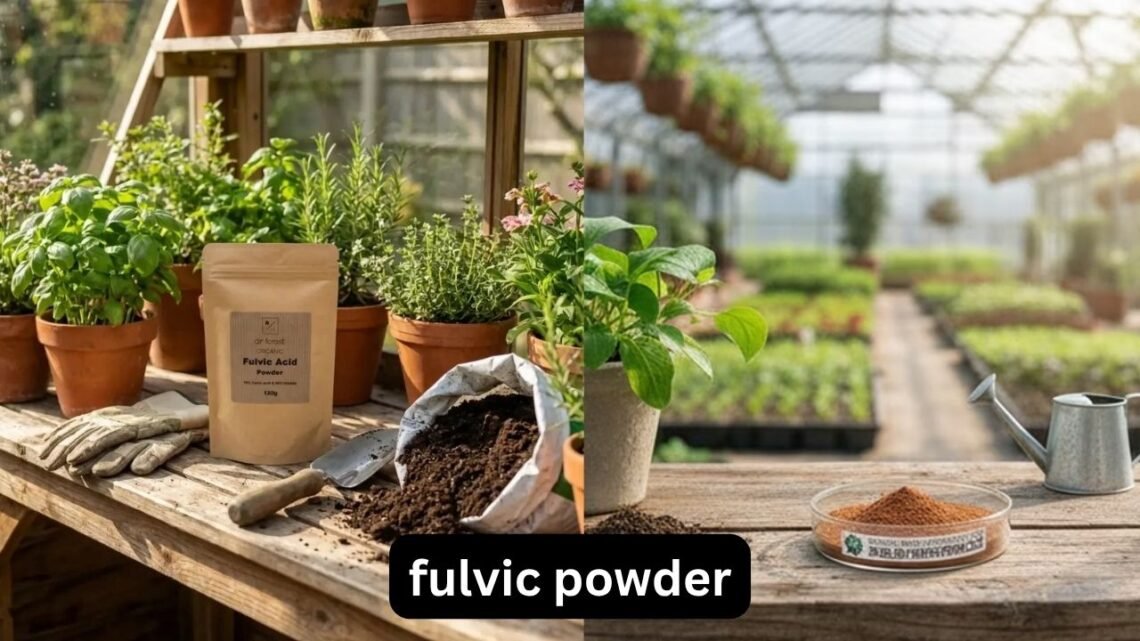
If you have come across fulvic powder while looking for better mineral support, “detox” products, or natural wellness supplements, you have probably noticed that the claims can be confusing. Some products describe fulvic acid as a mineral-rich natural compound, while others make much stronger promises about energy, immunity, gut health, or detoxification.
The important question is not simply whether fulvic acid sounds beneficial. It is what fulvic powder actually contains, where it comes from, how it has been processed, and whether the specific product has been tested for contaminants.
Fulvic acid is part of a larger group of naturally occurring substances called humic substances. It can interact with minerals and other compounds because of its chemically active structure. Research has identified potentially interesting biological properties, but human evidence remains much more limited than supplement marketing often suggests.
This guide explains what fulvic powder is, how it differs from humic acid, potential benefits, practical uses such as baths, and why product quality matters—especially after a well-known fulvic powder product was found to contain elevated lead and arsenic.
What Is Fulvic Powder?
Fulvic powder is a dried preparation containing fulvic substances, generally obtained by extracting humic materials from natural sources such as soil, peat, plant-derived organic matter, or low-rank coal.
Fulvic acid is not a single simple molecule. It is better understood as a complex mixture of organic compounds formed during the decomposition and transformation of biological material.
One useful way to understand the terminology is:
- Humic substances are the broad family.
- Humic acid is one fraction of that family.
- Fulvic acid is another fraction.
- Fulvic powder is a physical product that may contain concentrated fulvic substances and, depending on manufacturing, other minerals or organic compounds.
Fulvic substances are chemically interesting because they contain many functional groups that can interact with minerals and metals. This ability is one reason they have applications far beyond dietary supplements, including agriculture and environmental remediation.
Fulvic Powder vs. Humic Fulvic Powder
The terms are sometimes used interchangeably on product labels, but they do not necessarily mean exactly the same thing.
A product marketed as humic fulvic powder may contain a combination of humic acid and fulvic fractions rather than purified fulvic acid alone.
That distinction matters because different sources and extraction processes can produce substantially different chemical compositions. Modern reviews specifically note that natural fulvic materials can vary considerably according to their origin and extraction method.
In practical terms, two powders can both be called “fulvic” while having very different mineral profiles, concentrations, purity, and safety characteristics.
What Are the Potential Fulvic Powder Benefits?
Fulvic acid has attracted interest because laboratory and animal research suggests several potentially useful biological activities. However, it is important to distinguish potential mechanisms from proven health outcomes in humans.
1. Mineral Interaction
One of fulvic acid’s most interesting properties is its ability to bind or complex with minerals.
This chemistry helps explain why fulvic substances have long been studied in soil science and environmental chemistry. They can interact with metal ions and influence how those substances move through an environment.
Supplement companies sometimes turn this into claims about dramatically improving mineral absorption. That conclusion is much stronger than the available human evidence supports.
A better interpretation is that fulvic substances have mineral-binding chemistry, while the actual nutritional effect of a particular supplement depends on its composition, dose, and the person taking it.
2. Antioxidant and Anti-Inflammatory Potential
Research has identified antioxidant and anti-inflammatory activity associated with some fulvic and humic preparations.
Recent reviews describe several biological mechanisms that are being investigated, including effects involving inflammatory signaling and oxidative processes.
However, much of this research is laboratory, mechanistic, or preclinical. It should not automatically be interpreted as proof that taking fulvic powder will prevent inflammation-related diseases.
3. Possible Effects on the Gut Environment
Another emerging area is the interaction between humic substances and the intestinal environment.
Recent experimental research has reported effects on microbial communities and intestinal cell models. These findings are interesting, but they are still part of an evolving research field rather than a reason to treat fulvic powder as a proven probiotic or digestive treatment.
For someone considering fulvic powder for gut health, the practical lesson is simple: do not replace established dietary and medical approaches with a supplement based only on laboratory findings.
4. Potential Topical Applications
Fulvic acid has also been studied for skin applications.
A small randomized controlled study involving a carbohydrate-derived fulvic acid preparation investigated topical treatment for eczema. The researchers reported that the preparation was generally well tolerated and that some measures improved compared with the control treatment, while also noting a short-lived burning sensation in some applications.
That is encouraging, but it does not mean every fulvic powder is appropriate for application to the skin.
The source, concentration, purity, formulation, and intended use are important.
What About a Fulvic Powder Bath?
A fulvic powder bath is generally promoted as a topical wellness practice rather than an oral supplement.
People may add a small amount of a fulvic-containing product to bath water because they are interested in skin care, relaxation, or the proposed mineral and organic compounds in the preparation.
But there is an important distinction between a product specifically formulated and tested for topical use and a powder intended for oral consumption.
Before using any powder in bath water:
- Check whether the manufacturer specifically states that it is suitable for topical use.
- Check the complete ingredient list.
- Look for independent contaminant testing.
- Avoid products with unclear sourcing.
- Stop if you experience burning, itching, rash, or irritation.
Do not assume that “natural” means automatically safe for skin.
Can Fulvic Powder Detox the Body?
This is one of the most frequently exaggerated claims surrounding fulvic products.
Fulvic acid can bind certain metals and has genuine chemical activity involving metal ions. That does not establish that drinking fulvic powder will “pull toxins” out of a person’s body in a clinically meaningful way. Its metal-binding properties are well established in environmental chemistry, but translating those properties into a human detoxification treatment requires much stronger clinical evidence.
There is also an important irony here: a poorly controlled natural mineral product can itself contain unwanted metals.
That is not theoretical. In 2021, the U.S. FDA warned consumers to stop using Black Oxygen Organics’ Fulvic Care Powder and Tablets after testing found elevated levels of lead and arsenic. The agency advised consumers to discard the products.
So “detox” should never be the main reason to trust a fulvic product.
The Black Oxygen Fulvic Powder Controversy
If you searched for Black Oxygen fulvic powder, you may have encountered information about Black Oxygen Organics.
This deserves particular attention because it illustrates why sourcing matters more than attractive supplement claims.
The FDA reported in December 2021 that its testing of Black Oxygen Organics’ Fulvic Care Powder found elevated levels of lead and arsenic. The FDA advised consumers not to use the powder or tablets and to discard them.
This does not mean that every fulvic product contains dangerous levels of heavy metals.
It demonstrates something more practical:
A natural source can contain contaminants, and a fulvic product should not be judged solely by its ingredient name.
Fulvic materials can originate from geological and environmental sources where metals naturally occur. A recent toxicology paper also emphasizes that fulvic materials can vary substantially and that environmental-derived materials may contain impurities such as heavy metals.
A Better Way to Evaluate a Fulvic Product
Instead of asking only, “Is fulvic acid good?”, ask:
- Where was the raw material sourced?
- What extraction method was used?
- What percentage or concentration of fulvic substances is present?
- Has the finished product been independently tested?
- Are lead, arsenic, cadmium, and mercury reported?
- Is there a batch-specific certificate of analysis?
- Is the product intended for oral or topical use?
- Does the manufacturer provide a transparent ingredient list?
Those questions tell you much more than the word “natural” on the front of a package.
Is Fulvic Powder Safe?
Safety depends heavily on the specific preparation.
Some controlled toxicology studies of particular fulvic/humic preparations have reported reassuring results in animals. For example, one 90-day study of a specific preparation found no general or organ toxicity at the highest tested dose.
Another animal study reported a high no-observed-adverse-effect level for its particular fulvic acid preparation.
But those findings cannot automatically establish that every commercial fulvic powder is safe for humans.
The composition of fulvic products can vary considerably. That is why product-specific testing matters.
Possible Problems to Watch For
Depending on the formulation, people may experience:
- Digestive discomfort
- Nausea
- Changes in bowel habits
- Skin irritation with topical products
- Burning or stinging when applied to sensitive skin
- Unwanted exposure to contaminants in poorly controlled products
People taking medications should also be cautious. Dietary supplements can alter medication absorption, metabolism, or excretion, and the FDA recommends discussing supplement use with a healthcare professional when medication interactions are possible.
Pregnant or breastfeeding people, children, and anyone with a significant medical condition should be especially cautious about using an inadequately studied supplement.
A Practical Fulvic Powder Buying Checklist
If you are comparing several products, don’t choose simply because one has the highest advertised fulvic percentage.
Use this checklist instead.
Look for Independent Testing
The most useful document is a batch-specific certificate of analysis (COA) from an independent laboratory.
Ideally, it should identify testing for contaminants including:
- Lead
- Arsenic
- Cadmium
- Mercury
- Microbial contamination
A vague statement such as “lab tested” is less useful than an actual report showing the results.
Check the Source
Ask where the fulvic material originates.
The source matters because humic substances are chemically complex and their composition depends on geological and environmental origin. Extraction techniques can also change the resulting material.
Don’t Confuse Dark Color With Quality
Fulvic products can be brown, amber, or very dark depending on their composition.
A darker powder or liquid is not automatically more potent or more effective.
This is a surprisingly common mistake: consumers sometimes use color as a shortcut for judging quality when laboratory analysis is far more meaningful.
Three Less-Obvious Insights About Fulvic Powder
1. “Fulvic” Is Not a Standardized Single Substance
Unlike a simple compound with one precise molecular structure, fulvic material represents a complex mixture. Consequently, two products carrying the same name can behave differently chemically.
This is one reason generic claims about “fulvic powder benefits” can be misleading.
2. The Source May Matter More Than the Marketing Dose
A large dose of a poorly characterized product is not necessarily better than a smaller dose of a well-characterized preparation.
For natural complex mixtures, purity and contaminant control are fundamental parts of quality—not optional extras.
3. Chelation Is Not the Same as Detoxification
Fulvic substances can chemically interact with metals. But chemical binding in a laboratory or environmental setting is not equivalent to proving that an oral supplement removes harmful metals from a human body.
That distinction is especially important because contaminated products can create the very exposure that consumers are trying to avoid.
Common Mistakes People Make
Taking It Because It Is “Natural”
Natural substances can have biological effects and can also contain contaminants.
Natural origin is not a substitute for quality control.
Assuming More Is Better
There is no good reason to assume that taking increasingly large amounts will produce increasingly large benefits.
Follow the product’s intended use and avoid experimenting with high doses.
Buying Based Only on Testimonials
Personal experiences can be interesting, but they cannot establish whether a supplement works or whether a product is contaminated.
Independent laboratory testing is much more useful for evaluating product quality.
Using Oral Powder in the Bath
A supplement designed for ingestion is not automatically formulated for topical exposure.
If you want a fulvic bath product, choose one explicitly intended for bathing or topical use.
FAQ
What is fulvic powder used for?
Fulvic powder is used in supplements and some topical wellness products because fulvic substances can interact with minerals and have demonstrated biological activity in laboratory and preclinical research. Potential areas of interest include antioxidant activity, inflammatory pathways, mineral interactions, and topical skin applications. However, evidence for many advertised health benefits in humans remains limited.
Is humic fulvic powder the same as fulvic acid?
Not necessarily. “Humic fulvic” commonly describes a product containing both humic and fulvic fractions, while fulvic acid refers specifically to the fulvic fraction of humic substances. Because these materials are chemically complex, checking the actual product specification is more reliable than relying on the marketing name.
Can you use fulvic powder in a bath?
Only use it in a bath if the particular product is explicitly intended for topical or bathing use. A powder made for oral consumption may contain ingredients or concentrations that have not been evaluated for skin exposure. Patch-testing and stopping use if irritation occurs are sensible precautions.
Does fulvic powder remove heavy metals?
Fulvic substances can bind or interact with certain metals chemically, but that does not prove that an oral fulvic supplement safely removes heavy metals from humans. In fact, the FDA previously warned about a Black Oxygen Organics fulvic product after finding elevated lead and arsenic.
Is fulvic powder safe to take every day?
There is no single answer for every fulvic powder because formulations and sources differ. Toxicology studies of specific preparations have produced reassuring findings, but those results cannot automatically be applied to every commercial product. Choose a product with transparent sourcing and independent contaminant testing and discuss regular use with a healthcare professional if you take medications or have health concerns.
What should I look for when buying fulvic powder?
Prioritize transparent sourcing, a complete ingredient declaration, and independent testing of the finished batch. Heavy-metal testing is particularly important because naturally sourced fulvic materials can contain environmental contaminants. A batch-specific certificate of analysis is much more informative than broad claims such as “pure,” “detoxifying,” or “mineral rich.”
Conclusion
Fulvic powder is an interesting natural material, but it is not a magic detox powder.
Its chemistry is genuinely unusual: fulvic substances can interact with minerals and metals and have demonstrated antioxidant, anti-inflammatory, and other biological activity in experimental research. At the same time, many popular health claims have moved ahead of the clinical evidence.
The biggest practical lesson is quality control. Because fulvic materials vary according to their natural source and extraction process, the product you buy matters enormously. The history of Black Oxygen Organics’ Fulvic Care Powder—where the FDA found elevated lead and arsenic—shows why consumers should never assume that a “natural” mineral product is automatically safe.
If you are considering fulvic powder, focus less on dramatic detox promises and more on source, manufacturing, intended use, and independent contaminant testing. That approach gives you a much better basis for deciding whether a particular product is worth using.