
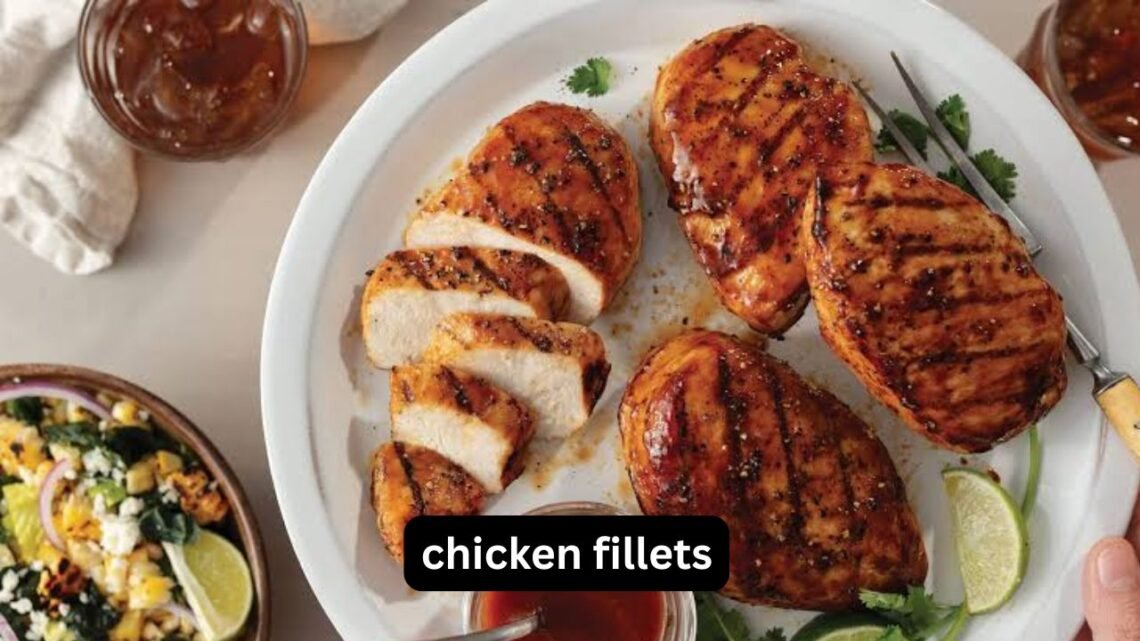
Chicken fillets are one of those foods that seem simple until you actually cook them. One minute you have a juicy piece of chicken ready for dinner; the next, it is dry, chewy, or still undercooked in the centre. This is especially common when cooking chicken fillets in an air fryer, where different thicknesses can make a big difference to cooking time.
Whether you have fresh chicken breast fillets, mini chicken fillets, breaded fillets from the freezer, or a meat-free option such as Quorn, the right method depends on what you are cooking. A thin fillet needs very different treatment from a thick one, while frozen breaded products generally need no added oil at all.
This guide explains how to cook chicken fillets safely and consistently, including how long chicken fillets take in an air fryer, how to avoid dryness, and what to look for when choosing supermarket options. It also covers useful differences between fresh, frozen, breaded, buttermilk and meat-free fillets, so you can choose the method that fits your meal rather than simply following one cooking time.
What Are Chicken Fillets?
A chicken fillet is usually a boneless piece of chicken, most commonly cut from the breast. Because there are no bones to slow cooking, fillets are convenient for quick meals such as sandwiches, wraps, salads, pasta dishes and rice bowls.
They can be sold in several forms:
- Fresh, plain chicken breast fillets
- Small or mini chicken fillets
- Frozen chicken fillets
- Breaded or crumbed chicken fillets
- Buttermilk-style coated fillets
- Pre-seasoned fillets
- Meat-free chicken-style fillets
The important thing is that these products are not interchangeable when it comes to cooking time. A fresh plain fillet and a frozen breaded fillet may look similar in size but behave very differently in an air fryer.
How Long Do Chicken Fillets Take in an Air Fryer?
For fresh, boneless chicken breast fillets, a useful starting point is around 18–22 minutes at 180°C (356°F), depending on thickness.
However, cooking time should never be based on the clock alone. The thickest part of the chicken should reach a safe internal temperature of 74°C (165°F).
A practical guide is:
| Type of fillet | Approximate air-fryer approach |
|---|---|
| Thin fresh fillet | 12–16 minutes at 180°C |
| Average fresh breast fillet | 18–22 minutes at 180°C |
| Thick breast fillet | 20–25+ minutes at 180°C |
| Mini chicken fillets | Around 10–15 minutes |
| Frozen breaded fillet | Follow package directions |
| Meat-free fillet | Follow package directions |
These are starting points rather than guaranteed cooking times. Air fryers vary considerably, and the thickness of the meat matters more than its weight alone.
The Most Reliable Method
For fresh chicken:
- Pat the fillets dry.
- Lightly coat them with oil if desired.
- Season both sides.
- Preheat the air fryer if your model benefits from preheating.
- Place the fillets in a single layer.
- Cook at around 180°C.
- Turn halfway through if necessary.
- Check the thickest section with a food thermometer.
- Let the chicken rest for a few minutes before slicing.
One useful trick is to flatten very thick chicken breasts to an even thickness before cooking. This can be more effective than simply adding more cooking time because the outside has less opportunity to become dry while you wait for the centre to cook.
Why Chicken Fillets Become Dry in an Air Fryer
Air fryers circulate hot air rapidly, which is excellent for browning but can also remove surface moisture quickly.
The biggest mistake is assuming that a longer cooking time is safer. Once chicken has reached a safe internal temperature, additional cooking generally makes the texture less juicy.
Three things make the biggest difference:
1. Thickness
A thick fillet can take considerably longer than a thin one. If one end is much thicker, the thin section may become dry before the centre of the thick section is ready.
2. Temperature
Very high heat can brown the outside quickly while leaving you waiting for the centre to cook. Moderate air-fryer temperatures are often easier to manage for plain chicken breast.
3. Resting
After cooking, leave the chicken alone for a few minutes. Cutting immediately into a hot fillet allows more of its juices to escape onto the plate.
A small amount of resting can make a surprisingly noticeable difference.
Fresh Chicken Fillets vs Mini Chicken Fillets
Mini chicken fillets are simply smaller pieces, which makes them particularly useful for quick meals.
They work well when you need:
- Chicken for wraps
- Salad toppings
- Meal-prep portions
- Stir-fries
- Quick lunches
- Children’s meals
Because they are smaller, they generally cook faster than full-size breast fillets.
The downside is that they can dry out quickly if you use the same cooking time as a large chicken breast. Check them earlier than you think you need to.
Practical insight: if you are cooking a mixed batch containing both large and small pieces, don’t automatically cook everything for the largest piece’s full cooking time. Remove the smaller pieces once they are safely cooked and continue cooking the thicker ones.
Breaded and Buttermilk Chicken Fillets
Breaded chicken fillets are different from plain chicken breast because the coating needs to become crisp while the chicken inside heats through.
Buttermilk-style chicken is usually associated with a seasoned coating and a tender, juicy interior. The coating can become particularly crisp in an air fryer because circulating air removes surface moisture.
For frozen products, the manufacturer’s instructions should take priority because products differ in thickness, coating and whether the chicken is raw, partially cooked or fully cooked.
How to Get a Crisp Coating
Avoid overcrowding the basket.
If pieces touch one another, hot air cannot circulate properly around them. You may end up with areas that are pale or less crisp.
For best results:
- Leave space between pieces.
- Avoid piling fillets on top of one another.
- Turn them if the package instructions recommend it.
- Don’t add unnecessary oil to already oily breading.
- Check the centre before serving.
A common mistake is repeatedly opening the air fryer to check the food. Every opening releases heat, so frequent checking can extend cooking time.
What About Supermarket Chicken Fillets?
Searches for products from Aldi, Iceland and other supermarkets are common because shoppers often want to know whether a particular package can be cooked directly in an air fryer.
The answer depends on the exact product.
For example, two packages labelled “chicken fillets” could have completely different instructions because one might contain plain raw chicken while another is breaded, seasoned, frozen or already cooked.
When buying supermarket chicken fillets, check:
- Whether the product is fresh or frozen
- Whether it is raw or cooked
- The thickness of each piece
- Whether it has a coating
- The recommended cooking temperature
- Whether the package specifically permits air-fryer cooking
Don’t substitute a generic air-fryer cooking time for the instructions on a packaged product when those instructions are available.
Chicken Fillets for Bras: A Completely Different Meaning
There is another search intent behind the phrase “chicken fillets for bras.”
In this context, chicken fillets are not food. The term refers to soft bra inserts, usually made from silicone or another flexible material, designed to add shape, lift or fullness inside a bra.
They are commonly used with:
- Strapless dresses
- Low-cut outfits
- Eveningwear
- Swimwear
- Bras with removable padding
The name comes from the soft, rounded appearance of some inserts rather than from anything related to cooking.
When choosing bra inserts, comfort and fit matter more than simply choosing the largest size. An insert that moves around during wear can be more noticeable than one that provides slightly less volume but stays securely positioned.
Quorn Chicken Fillets: Don’t Treat Them Like Chicken
Quorn chicken-style fillets are a meat-free alternative and should not automatically be cooked using the same method or timing as raw chicken breast.
This distinction is important because the food itself has a different structure and manufacturing process.
For meat-free fillets, use the package’s cooking instructions as your starting point. An air fryer can work well for products that are designed for it, particularly when you want a browned exterior.
The goal is not to make a meat-free product reach the same internal temperature as raw chicken. Instead, follow the product-specific heating instructions.
Three Less-Obvious Tips That Make a Difference
Use thickness, not weight, to estimate cooking time
Two chicken fillets can weigh the same but have completely different shapes. A compact, thick fillet takes longer for heat to reach its centre than a flatter piece.
When deciding whether chicken needs more time, look at the thickest point rather than the total weight.
Don’t judge doneness by colour alone
Chicken can appear white on the outside before it has reached a safe internal temperature. Conversely, slight colour variation does not necessarily mean it is unsafe.
A food thermometer gives you much more useful information than cutting the chicken repeatedly to inspect the centre.
A quick flattening step can improve both safety and texture
If a breast is extremely thick at one end, gently flattening it to a more even thickness can produce more consistent cooking.
This is especially useful for air fryers because the hot circulating air can brown the thinner areas quickly. Even thickness means the entire piece tends to finish at a similar time.
Common Chicken Fillet Mistakes
Overcrowding the air fryer
This restricts airflow and can lead to uneven browning and cooking.
Better approach: cook in batches when necessary.
Guessing the cooking time
A recipe saying “20 minutes” doesn’t mean every air fryer and every fillet needs exactly 20 minutes.
Better approach: use the time as a starting point and verify the thickest piece.
Cooking frozen chicken without checking the product
Frozen products vary considerably. Some are designed to go directly into the air fryer, while others have different preparation requirements.
Better approach: follow the package directions first.
Cutting chicken immediately
Slicing straight away can release juices that would otherwise remain in the meat.
Better approach: give cooked chicken a short rest before serving.
Adding too much oil
Plain chicken may benefit from a light coating, but more oil isn’t automatically better. Breaded products may already contain enough fat to brown effectively.
Better approach: use only the amount needed for your particular preparation.
How to Build a Quick Meal Around Chicken Fillets
Chicken fillets are particularly useful because one cooking method can become several different meals.
For example, cook plain seasoned fillets and use them for:
- A chicken and salad wrap
- Rice with vegetables
- Pasta with a creamy or tomato-based sauce
- A high-protein lunch bowl
- Sandwiches
- Caesar-style salads
- Tacos or fajitas
Mini fillets are especially convenient for meal preparation because they can be portioned more easily.
If you’re preparing chicken for several meals, let it cool appropriately after cooking and store it safely rather than leaving it at room temperature for extended periods.
Frequently Asked Questions
How long do chicken fillets take to cook in an air fryer?
Fresh boneless chicken fillets commonly take around 18–22 minutes at 180°C, but the exact time depends on thickness and the air fryer. Thin or mini fillets may finish considerably sooner. Always check the thickest part and make sure fresh chicken reaches 74°C (165°F).
Can you cook frozen chicken fillets in an air fryer?
Many frozen chicken products can be prepared in an air fryer, but the correct method depends on the product. Frozen breaded fillets, for example, may have very different instructions from frozen raw chicken. Check the package directions and verify that the centre is properly cooked before eating.
How long do mini chicken fillets take in an air fryer?
Mini chicken fillets can take roughly 10–15 minutes at around 180°C, although their size and thickness can change the timing. Start checking them earlier than full-size chicken breasts. Avoid leaving small pieces in for the same amount of time as much thicker fillets.
Are Quorn chicken fillets cooked the same way as real chicken?
No. Quorn chicken-style fillets are meat-free products and should be prepared according to their specific package instructions. They do not need to be treated as raw chicken breast. An air fryer can be useful for browning them, provided the product instructions allow that cooking method.
What are chicken fillets for bras?
Chicken fillets for bras are removable inserts designed to add shape, lift or volume to clothing. They are commonly made from silicone or similar soft materials and are used with dresses, bras, swimwear and other outfits. They have nothing to do with edible chicken fillets; the same search phrase refers to two completely different products.
Final Thoughts
Chicken fillets are easy to cook once you stop treating every type as the same food. Fresh chicken breast, mini fillets, frozen breaded products and meat-free alternatives each need a slightly different approach.
For fresh chicken in an air fryer, focus on thickness, airflow and internal temperature, rather than blindly following a timer. Keep pieces in a single layer, avoid excessive cooking, and allow the chicken to rest before serving.
For packaged products from supermarkets, the product-specific instructions should take priority. And if your search for “chicken fillets” actually relates to bra inserts, remember that you’re looking at an entirely different type of product.
The simplest rule is also the most useful: cook according to the food you actually have, not just the name on the package. That small change makes air-fryer chicken more predictable, juicier and much easier to get right.