
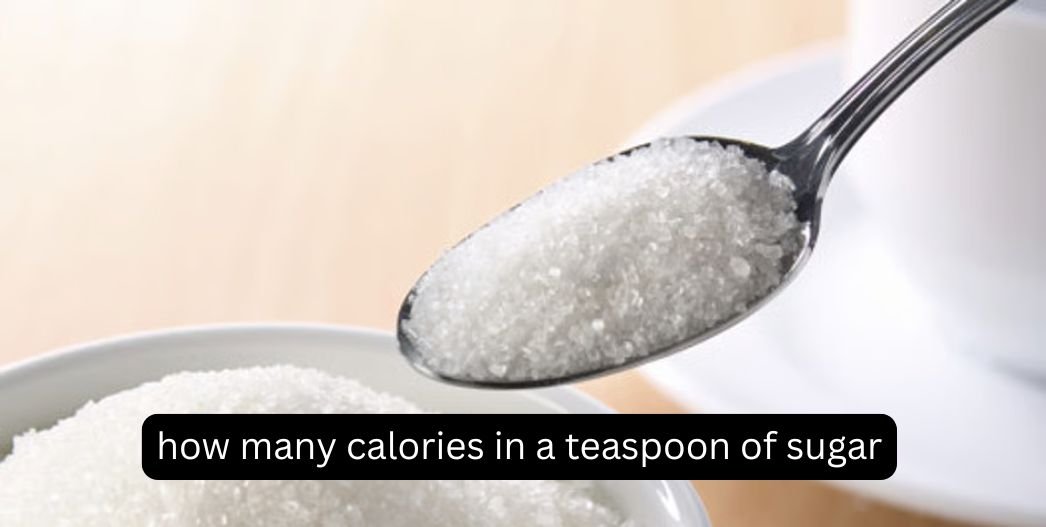
If you are trying to reduce sugar, counting calories, or simply wondering what that spoonful in your tea is adding to your daily intake, you may ask: how many calories in a teaspoon of sugar? A standard teaspoon of granulated white sugar contains about 16 calories, assuming it weighs roughly 4 grams.
That number sounds small, and on its own, it is. The interesting part is how quickly those calories can add up when you have several cups of tea or coffee throughout the day. Two teaspoons in every cup, for example, can contribute more than 30 calories per drink.
The answer can also vary slightly depending on how much sugar you actually put on the spoon. A level teaspoon is different from a rounded or heaped teaspoon.
This guide explains exactly where the calories come from, how sugar compares with other sweeteners, how much one or more teaspoons add to your daily intake, and some simple ways to cut back without making your favourite drinks unpleasant.
How Many Calories Are in a Teaspoon of Sugar?
A level teaspoon of granulated sugar contains approximately 16 calories.
The calculation is straightforward:
- 1 gram of sugar: about 4 calories
- 1 teaspoon of sugar: approximately 4 grams
- 4 grams × 4 calories: about 16 calories
So, for everyday calorie counting, 16 calories per level teaspoon is a useful figure to remember.
The exact amount can vary because teaspoons measure volume rather than weight. Someone who lightly fills a teaspoon may use less than 4 grams, while a rounded spoon may contain considerably more.
Calories in Different Amounts of Sugar
| Sugar amount | Approximate weight | Calories |
|---|---|---|
| ½ teaspoon | 2 g | 8 calories |
| 1 teaspoon | 4 g | 16 calories |
| 2 teaspoons | 8 g | 32 calories |
| 3 teaspoons | 12 g | 48 calories |
| 4 teaspoons | 16 g | 64 calories |
| 5 teaspoons | 20 g | 80 calories |
| 6 teaspoons | 24 g | 96 calories |
These figures are approximate because the actual weight depends on the size of the spoon and how tightly the sugar is packed.
Why Does Sugar Have 16 Calories Per Teaspoon?
Sugar is a carbohydrate, and carbohydrates provide around 4 calories per gram.
When you eat ordinary table sugar, your digestive system breaks it down into simple sugars that the body can use for energy. A teaspoon containing about 4 grams therefore provides roughly 16 calories.
Unlike foods such as nuts, cheese, or avocado, table sugar contributes almost no protein, fat, fibre, vitamins, or minerals. Its main nutritional contribution is carbohydrate in the form of sugar.
That does not mean a teaspoon of sugar is automatically harmful. The more useful question is how much added sugar you consume overall and what the rest of your diet looks like.
How Many Calories Are in a Teaspoon of Sugar in the UK?
For people in the UK, the answer is essentially the same: around 16 calories for a level teaspoon of granulated sugar.
You may see sugar discussed in grams rather than teaspoons on UK nutrition information. This is useful because grams provide a more consistent measurement.
For example:
- 4 g sugar ≈ 16 calories
- 8 g sugar ≈ 32 calories
- 12 g sugar ≈ 48 calories
- 20 g sugar ≈ 80 calories
If you are tracking your intake, checking the number of grams is usually more accurate than relying on the size of your teaspoon.
Does a UK Teaspoon Mean Exactly 4 Grams?
Not necessarily.
A teaspoon is a volume measurement, whereas grams measure weight. Four grams is a convenient approximation for a level teaspoon of granulated sugar, not a guarantee.
The amount can change depending on:
- Whether the spoon is level or rounded
- The type and grain size of the sugar
- How tightly the sugar is packed
- The actual spoon being used
This is one reason nutrition calculations based on weighed ingredients can be more precise.
Level vs Heaped Teaspoon: Why It Matters
This is an easy detail to overlook.
Imagine you add what you consider to be “one teaspoon” of sugar to your morning coffee. If the spoon is level, you might use roughly 4 grams. If you scoop up a generous, rounded spoonful, you could be adding significantly more.
For calorie tracking, think of it this way:
Level teaspoon ≈ 16 calories
Rounded or heaped teaspoon = potentially more than 16 calories
There is no single calorie figure for a heaped teaspoon because the amount of sugar on the spoon can vary considerably.
If accuracy matters to you, weighing the sugar is the simplest solution.
How Many Calories Are in Two Teaspoons of Sugar?
Two level teaspoons of sugar contain approximately 32 calories.
That may not seem significant, but consider someone who drinks four cups of tea or coffee every day and adds two teaspoons to each:
2 teaspoons × 4 drinks = 8 teaspoons
Eight teaspoons provide approximately:
8 × 16 = 128 calories
The sugar alone could therefore contribute around 128 calories per day.
Over a week, that would be roughly 896 calories from added sugar in drinks alone.
This is a useful real-world example because small additions can become much more substantial when repeated every day.
What About Three Teaspoons of Sugar?
Three level teaspoons provide approximately 48 calories.
If you regularly use three teaspoons in one drink, the sugar is no longer a tiny contribution.
For example:
- 1 drink with 3 teaspoons = 48 calories
- 2 drinks = 96 calories
- 3 drinks = 144 calories
- 4 drinks = 192 calories
The calculation is simple, but it illustrates why people who are trying to reduce their calorie intake sometimes start by looking at sweetened drinks.
You do not necessarily have to eliminate sugar completely. Reducing the amount gradually can make the change easier to maintain.
Sugar Calories Compared With Other Sweeteners
Not every sweetener contributes calories in exactly the same way.
Honey
Honey contains calories and is still a source of sugar. A teaspoon of honey may contain somewhat more or less energy than a teaspoon of granulated sugar depending on its weight and composition.
Calling honey “natural” does not make it calorie-free.
Brown Sugar
Brown sugar contains a similar amount of energy by weight to white sugar.
The small amount of molasses gives brown sugar its colour and flavour, but it does not turn it into a low-calorie alternative.
If you replace white sugar with brown sugar teaspoon-for-teaspoon, you should not expect a major calorie reduction.
Artificial and Low-Calorie Sweeteners
Some sweeteners provide very little or no energy at the quantities normally used. Examples include certain high-intensity sweeteners.
However, these products differ in taste, composition, and how they are used. A low-calorie sweetener can reduce the calories added to a drink, but the overall nutritional quality of the drink still depends on what else goes into it.
Is 16 Calories From Sugar a Lot?
On its own, 16 calories is a small amount of energy.
The bigger issue is frequency.
One teaspoon in a cup of tea is very different from adding several teaspoons to multiple drinks every day. The same principle applies to sugar added to cereal, porridge, desserts, sauces, and other foods.
A practical way to think about it is:
One teaspoon is small; repeated teaspoons are where the numbers start to matter.
This is particularly useful for people who find calorie counting overwhelming. Instead of trying to change everything at once, look for repeated sources of added sugar.
How Sugar in Tea and Coffee Adds Up
Tea and coffee are among the easiest places to notice how a small amount becomes a daily habit.
Suppose your normal drink contains two teaspoons of sugar.
| Drinks per day | Teaspoons of sugar | Approx. calories |
|---|---|---|
| 1 | 2 | 32 |
| 2 | 4 | 64 |
| 3 | 6 | 96 |
| 4 | 8 | 128 |
| 5 | 10 | 160 |
If you drink several cups every day, gradually reducing the sugar can make a meaningful difference without changing the drink itself.
For example, someone using two teaspoons could try 1½ teaspoons for a week, then one teaspoon. Your taste preferences can adapt over time.
Does Sugar Make You Gain Weight?
Sugar itself is not uniquely responsible for weight gain. Excess calorie intake over time is the fundamental issue when body weight increases.
However, foods and drinks containing added sugar can make it easier to consume more calories, particularly when they provide energy without making you feel very full.
Sweetened drinks are a good example. It is possible to consume several teaspoons of sugar quickly without experiencing the same fullness you might get from eating a whole-food snack containing protein, fibre, or both.
That is why looking at your overall eating pattern is more useful than worrying about a single teaspoon.
A Useful Tip: Measure Your Usual Spoon Once
One of the simplest ways to understand your sugar intake is to measure it once.
Take the spoon you normally use and add sugar exactly as you normally would. Then weigh the sugar on a kitchen scale.
You may discover that your “one teaspoon” is actually:
- 3 grams
- 4 grams
- 5 grams
- 6 grams
- Or more
Once you know your typical amount, calculating the calories becomes much easier.
This is particularly helpful for people who are tracking food but do not want to weigh every ingredient forever.
Three Practical Ways to Reduce Sugar Without Ruining Your Drink
If sweet tea or coffee is part of your routine, suddenly removing all the sugar can make the drink taste unpleasant.
Instead, try one of these approaches.
1. Reduce Gradually
If you normally use two teaspoons, try 1½ for several days before moving to one.
Your taste buds can adjust, making the transition less noticeable.
2. Keep the Same Number of Drinks
Rather than immediately changing everything, focus on the sugar in each drink.
For example, reducing from two teaspoons to one teaspoon cuts approximately 16 calories from each cup.
3. Make the Reduction Where You Won’t Miss It
Some people barely notice a small reduction in sugar in strongly flavoured tea or coffee. Others find it much more obvious.
Experiment with different drinks rather than assuming you need to make the same change everywhere.
Common Mistakes When Counting Sugar Calories
Mistake 1: Assuming Every Teaspoon Weighs 4 Grams
Four grams is a useful estimate, but your actual spoonful may weigh more or less.
Mistake 2: Forgetting Drinks
People often remember sugar added to food but overlook tea, coffee, hot chocolate, and other beverages.
Mistake 3: Treating Brown Sugar as Low-Calorie Sugar
Brown and white sugar are quite similar in calorie content by weight.
Mistake 4: Confusing Natural Sugar With Added Sugar
Fruit contains naturally occurring sugars alongside water, fibre, vitamins, and minerals. Table sugar added to a drink is different from eating a whole piece of fruit.
Mistake 5: Focusing on One Teaspoon Instead of the Whole Diet
If you are concerned about calorie intake, looking only at sugar in one cup of tea can distract from larger sources of energy in the diet.
Does Sugar Have Any Nutritional Value?
Table sugar provides energy but very little else nutritionally.
It does not provide meaningful amounts of protein or fibre and contains only tiny amounts of micronutrients. This is why sugar is often described as providing “empty calories.”
That phrase can be useful, but it should not be interpreted to mean that eating a small amount of sugar makes an otherwise balanced diet unhealthy.
Food choices need to be considered in context.
A teaspoon of sugar in an otherwise nutritious meal is a very different situation from regularly consuming large quantities of sugar through drinks, desserts, and processed foods.
A Simple Way to Think About Your Daily Sugar
Rather than worrying about every individual teaspoon, use a three-step check:
- How much sugar do I add?
- How often do I add it?
- Are there other significant sources of added sugar in my diet?
For example, one teaspoon in morning tea may not be especially important by itself. But if you also add sugar to several coffees, eat sugary snacks, and regularly drink sweetened beverages, the combined amount becomes more relevant.
This approach gives you a much clearer picture than focusing on a single ingredient.
FAQ
How many calories in a teaspoon of sugar?
A level teaspoon of granulated sugar contains approximately 16 calories. This assumes the teaspoon contains around 4 grams of sugar. A rounded or heaped teaspoon can contain more, so the actual calorie count may be higher.
How many calories are in two teaspoons of sugar?
Two level teaspoons contain approximately 32 calories. If you add two teaspoons to several cups of tea or coffee each day, those calories can accumulate surprisingly quickly.
How many calories are in a teaspoon of sugar in the UK?
A level teaspoon of ordinary granulated sugar in the UK contains roughly 16 calories, assuming approximately 4 grams of sugar. The exact amount depends on how much sugar is actually placed on the spoon.
Is brown sugar lower in calories than white sugar?
Not significantly. Brown sugar and white granulated sugar contain broadly similar amounts of energy by weight. Choosing brown sugar instead of white sugar should therefore not be considered a major calorie-saving strategy.
How many calories are in one teaspoon of sugar in tea?
If you add one level teaspoon of ordinary sugar to tea, it contributes approximately 16 calories. Milk, cream, honey, flavoured syrups, or other additions would contribute additional calories.
Can reducing one teaspoon of sugar help with weight loss?
Reducing one teaspoon removes roughly 16 calories from each drink containing that teaspoon. Whether this contributes to weight loss depends on your overall calorie intake and energy expenditure, but reducing repeated sources of added calories can be a practical part of a broader dietary change.
The Bottom Line
A level teaspoon of granulated sugar contains about 16 calories and roughly 4 grams of sugar. Two teaspoons provide around 32 calories, while three provide around 48 calories.
The most important detail is not the 16-calorie number itself but how often you consume it. A teaspoon added occasionally is very different from several teaspoons added to multiple drinks every day.
If you are trying to reduce your calorie or added-sugar intake, start with the habits that happen repeatedly. Measuring your usual spoonful once, gradually reducing sugar in tea or coffee, and paying attention to sweetened drinks can give you useful results without requiring a complete diet overhaul.
Sometimes, a small spoon really can tell you something useful about the bigger picture of your diet.