
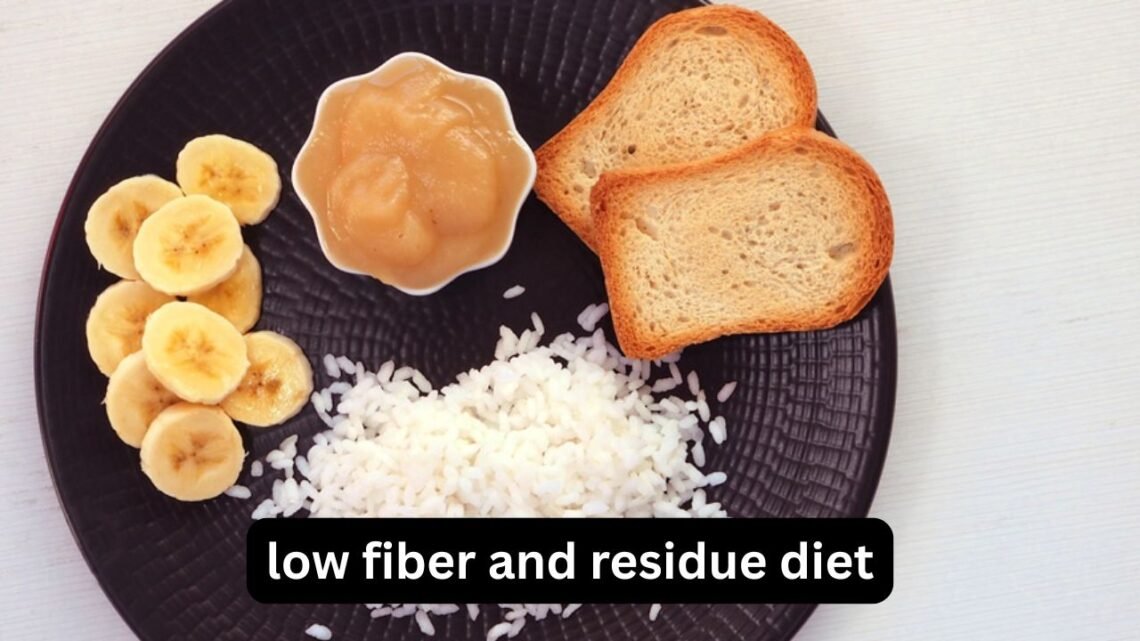
Imagine you have been told to “eat less fiber” before a medical procedure or because your digestive system needs a break. Suddenly, foods that are normally considered healthy—whole grains, raw vegetables, beans, nuts, and fruit skins—are no longer obvious choices. It can be surprisingly difficult to know what you can actually put on your plate.
A low fiber and residue diet is designed to reduce the amount of undigested food moving through the digestive tract. It is sometimes recommended for a short period before certain bowel procedures, during digestive flare-ups, or when a healthcare professional wants to reduce stool volume.
This guide explains what the diet really means, which foods are usually better tolerated, what to avoid, and how to build practical meals without turning every meal into a guessing game. It also covers an important point that is often missed: “low fiber” and “low residue” are related but not always identical concepts. Your medical reason for following the diet matters, so use your clinician’s instructions when they differ from general dietary guidance.
What Is a Low Fiber and Residue Diet?
A low fiber and residue diet limits foods that leave substantial undigested material in the intestines. Dietary fiber is the part of plant foods that the body does not completely digest, while “residue” can refer more broadly to material remaining in the bowel after digestion.
The practical goal is usually to:
- Reduce stool volume
- Decrease bowel movements
- Limit intestinal bulk
- Make digestion easier for some people during specific medical situations
- Prepare the bowel for certain procedures when instructed
Fiber itself is not unhealthy. In everyday life, adequate fiber is generally beneficial for digestive and overall health. A low-fiber diet is therefore usually a temporary, medically directed strategy, rather than a diet most people should follow indefinitely.
Low fiber vs. low residue
The terms are often used interchangeably, but they are not perfectly synonymous.
A low-fiber diet specifically restricts dietary fiber. A low-residue approach may also limit foods that can increase stool bulk or leave more material in the digestive tract, depending on the medical purpose and the clinician’s protocol.
For example, a person may be told to avoid seeds, tough vegetable skins, popcorn, or certain fibrous foods even when the issue is not simply the number of grams of fiber listed on a nutrition label.
Who Might Need This Diet?
There is no single medical condition that automatically means everyone should follow a low-residue diet. Recommendations vary according to the situation.
A healthcare professional may recommend a temporary low-fiber or low-residue eating pattern in circumstances such as:
- Preparation for some gastrointestinal procedures
- Certain bowel surgeries or recovery periods
- Temporary digestive symptoms
- Some intestinal conditions when symptoms are particularly troublesome
- Situations where reducing stool bulk is medically useful
The diet should be individualized. Someone preparing for a colon procedure may receive a much stricter set of instructions than someone using a lower-fiber diet temporarily because of digestive symptoms.
Important: If your doctor or procedure center gives you a specific food list, timing schedule, or fasting instruction, follow that protocol rather than relying on a generic low-residue food list.
What Can You Eat on a Low Fiber Diet?
The easiest way to approach this diet is not to memorize hundreds of foods. Instead, choose foods that are generally soft, refined, well-cooked, peeled, strained, or low in fiber.
Grains and starches
Commonly tolerated choices can include:
- White bread
- Plain white toast
- Refined crackers
- White rice
- Refined pasta
- Plain noodles
- Low-fiber cereals
- Refined flour products
Whole-grain bread, bran cereals, brown rice, and other high-fiber grains are usually restricted.
A useful real-world trick is to check the nutrition label rather than judging a product solely by its appearance. “Multigrain” or “healthy” branding does not necessarily make a food appropriate for a low-fiber plan.
Vegetables
Vegetables often need more preparation rather than complete elimination.
Depending on your specific instructions, better options may include vegetables that are:
- Well cooked
- Soft
- Peeled
- Seedless
- Strained or pureed
Examples can include well-cooked carrots or peeled potatoes without the skin.
Raw salads, vegetable skins, seeds, corn, and particularly fibrous vegetables are more likely to be restricted.
Fruits
Fruit can still be possible, but preparation matters.
Options may include:
- Ripe banana
- Melon without seeds
- Applesauce
- Canned fruit without skins or seeds
- Strained fruit preparations
Whole apples with skin, berries with seeds, dried fruit, and many raw fruits with substantial fiber are generally less suitable.
Protein foods
Most unprocessed animal proteins contain little or no dietary fiber, making them relatively straightforward choices.
Depending on your medical instructions, suitable options may include:
- Eggs
- Chicken
- Turkey
- Fish
- Tender cuts of meat
Preparation matters. Fried foods, heavily seasoned meals, fatty meats, and rich sauces may be difficult for some people even though they are not necessarily high in fiber.
Dairy
Milk, yogurt, cheese, and other dairy foods may fit a low-fiber plan if you tolerate dairy and your clinician has not restricted it.
However, individual tolerance matters. Someone who becomes bloated or uncomfortable after dairy may need different choices.
Foods Usually Limited or Avoided
A simple rule is that foods with lots of intact plant structure tend to be more challenging.
Commonly restricted foods include:
| Food group | Examples to limit |
|---|---|
| Whole grains | Bran, brown rice, whole-grain bread |
| Legumes | Beans, lentils, chickpeas |
| Nuts and seeds | Almonds, peanuts, sunflower seeds |
| Raw vegetables | Salads, raw carrots, cabbage |
| Tough produce | Vegetable skins and fruit skins |
| Seeds | Berries and seeded fruits |
| High-fiber fruit | Dried fruit, prunes |
| Popcorn | Especially difficult to digest fully |
| Certain cereals | Bran and high-fiber cereals |
The exact restrictions can vary considerably. For a procedure, even a food that seems harmless may be prohibited during the final preparation period.
A Simple One-Day Low-Residue Meal Plan
Here is an example of how the diet can work in everyday life. It is not a substitute for procedure-specific instructions.
Breakfast
- Scrambled eggs
- White toast
- A small serving of ripe banana
- Tea or coffee if permitted
Lunch
- Grilled or baked chicken
- White rice
- Well-cooked peeled carrots
- Water or another permitted drink
Snack
- Plain yogurt
- Applesauce
Dinner
- Baked fish
- Mashed potatoes without skin
- A small portion of well-cooked vegetables
Evening snack
If needed and permitted, a simple low-fiber option such as plain crackers or yogurt may work.
One of the most practical lessons is that simple meals are often easier than trying to “healthify” them. During a temporary low-residue period, white rice and plain chicken may be more appropriate than a high-fiber grain bowl loaded with vegetables and seeds.
How to Make the Diet Easier to Follow
The biggest challenge is often not knowing what foods exist. It is navigating normal meals, restaurants, workdays, and family cooking.
1. Change preparation, not just ingredients
Peeling and thoroughly cooking produce can significantly change its texture and fiber content. Removing skins and seeds can also make certain foods more compatible with a low-residue eating pattern.
However, don’t assume that cooking automatically makes every high-fiber food acceptable. Beans, bran, nuts, and other naturally fiber-rich foods can remain unsuitable.
2. Keep meals boring on purpose
For a short medical diet, repetition can actually be useful.
Having a small collection of dependable meals—such as eggs and toast, chicken and rice, or fish with mashed potatoes—reduces decision fatigue and makes accidental high-fiber choices less likely.
3. Read labels carefully
Look at the dietary fiber line on packaged foods.
A product marketed as “whole grain,” “high protein,” “plant-based,” or “with added prebiotic fiber” may not fit your temporary dietary restrictions.
4. Prepare food before you become hungry
This sounds trivial, but it matters. If you wait until you’re extremely hungry, convenience foods tend to win.
Cook plain protein and starches ahead of time and keep permitted snacks available.
5. Don’t confuse low fiber with low nutrition
A temporary low-fiber diet can still contain protein, calories, fluids, and a variety of tolerated foods.
The objective is not to eat as little as possible. It is to temporarily reduce certain types of dietary bulk while maintaining adequate nourishment according to your healthcare team’s instructions.
Three Overlooked Details That Can Make a Big Difference
The same food can behave differently depending on preparation
A peeled, thoroughly cooked vegetable is not nutritionally or physically identical to the same vegetable eaten raw with its skin. For low-residue eating, texture and preparation can be just as important as the food’s name.
“Healthy” foods can be the wrong choice temporarily
People naturally reach for oatmeal, bran cereal, brown rice, nuts, seeds, fruit skins, and large salads when trying to eat well. Those are often excellent everyday foods, but they may work against a temporary low-residue plan.
This is a situation where healthy in general does not necessarily mean appropriate right now.
The timing can matter more than the food list
If the diet is being used for bowel preparation, what you eat the day before a procedure—and when you stop eating solid food—may matter as much as your general low-fiber choices.
This is why generic internet food lists should never override the written instructions from your procedure team.
Common Mistakes to Avoid
Mistake 1: Assuming all cooked vegetables are allowed
Cooking helps, but some vegetables remain relatively fibrous. Follow your specific approved food list when restrictions are strict.
Mistake 2: Forgetting seeds and skins
People often remember to avoid beans but overlook seeds in berries, fruit skins, vegetable peels, and seeded foods.
Mistake 3: Choosing “high-fiber” products by accident
Some packaged foods contain added fiber that is easy to miss unless you read the nutrition label.
Mistake 4: Eating a huge meal because the diet feels restrictive
Large portions can cause discomfort even when the individual foods are permitted. Smaller, simple meals may be easier to manage.
Mistake 5: Treating a temporary diet as a permanent lifestyle
Unless your healthcare professional specifically recommends long-term restriction, there is usually no reason to permanently eliminate nutritious high-fiber foods simply because you temporarily needed a low-residue diet.
What About Fluids?
Adequate hydration is important, but fluid instructions can change dramatically around medical procedures.
For ordinary temporary dietary use, water is generally a key part of maintaining hydration. Around bowel preparation, however, your medical team may specify exactly which liquids are permitted and when you must stop drinking.
If you are experiencing persistent vomiting, severe abdominal pain, significant weakness, inability to keep fluids down, or other concerning symptoms, contact a healthcare professional rather than trying to manage the situation through dietary changes alone.
How Long Should You Follow a Low-Residue Diet?
There is no universal duration.
Some people use a low-fiber diet for only a few days around a procedure. Others may receive a longer-term plan because of a particular medical situation.
The appropriate duration depends on why the diet was prescribed, your symptoms, nutritional needs, and your clinician’s recommendations.
If you have been told to remain on a restricted diet for an extended period, ask whether you should work with a registered dietitian. Long-term unnecessary restriction can make it harder to consume enough fiber and certain nutrients.
Low Fiber vs. Regular High-Fiber Eating
| Low-fiber approach | Typical high-fiber diet |
|---|---|
| White rice | Brown rice |
| Refined bread | Whole-grain bread |
| Peeled/cooked vegetables | Raw or whole vegetables |
| Applesauce | Whole apple with skin |
| Limited beans | Beans and lentils |
| Limited nuts/seeds | Nuts and seeds |
| Lower stool bulk | Greater stool bulk |
Neither approach is universally “better.” They serve different purposes.
For everyday health, fiber-rich foods are generally valuable. For a specific medical situation, temporarily reducing fiber may be exactly what your healthcare professional wants.
When Should You Ask a Doctor or Dietitian?
Speak with your healthcare team if you are unsure whether a particular food is allowed, especially if the diet is being used before a medical procedure.
Professional advice is particularly important if:
- You need the diet for more than a short period
- You are losing weight unintentionally
- You are struggling to eat enough
- You have persistent digestive symptoms
- You have multiple dietary restrictions
- You have diabetes or another condition requiring meal planning
- Your procedure instructions conflict with a generic food list
A dietitian can also help turn a restrictive food list into meals that are practical, nutritionally adequate, and realistic for your normal routine.
FAQ
Is a low-fiber diet the same as a low-residue diet?
Not exactly. A low-fiber diet specifically limits dietary fiber, while a low-residue diet may place additional restrictions on foods that contribute to intestinal residue or stool bulk. In everyday conversation, the terms are often used interchangeably, but medical instructions may distinguish between them.
Can I eat eggs on a low-fiber diet?
Eggs are generally considered a low-fiber food because they contain no dietary fiber. They can often be included in a low-fiber meal plan unless your healthcare professional has given you another restriction. Preparation may still matter if fatty or heavily fried foods cause digestive discomfort.
Can I eat fruit on a low-residue diet?
Some fruit may be allowed, particularly when it is peeled, cooked, canned, or otherwise free of skins and seeds. Examples can include applesauce, ripe banana, and certain canned fruits. Your specific medical instructions should determine which fruits and preparation methods are acceptable.
Can I eat rice on a low-fiber diet?
White rice is commonly included in low-fiber meal plans because it contains considerably less fiber than brown or wild rice. Plain preparation is often the simplest choice. If you are preparing for a medical procedure, follow the exact instructions provided by your healthcare team.
How long can you stay on a low-fiber diet?
The appropriate duration depends on why the diet was recommended. It may be appropriate for only a few days in some situations, while certain medical conditions may require a longer individualized plan. Long-term restriction should generally be medically supervised so that nutritional needs are not overlooked.
What is the easiest meal to eat on a low-residue diet?
A simple combination such as lean chicken or fish, white rice or peeled potatoes, and an appropriate well-cooked vegetable is often practical. Breakfast can be as simple as eggs with white toast. Keeping meals uncomplicated makes it easier to follow the diet accurately.
Conclusion
A low fiber and residue diet is best understood as a temporary tool for a specific digestive or medical purpose, not as a statement that fiber is unhealthy. The basic strategy is straightforward: choose refined grains and tender proteins, prepare permitted fruits and vegetables without skins or seeds, limit high-fiber foods such as beans, bran, nuts, seeds, and whole grains, and pay close attention to your healthcare provider’s timing instructions.
The most important practical lesson is to focus on why you have been asked to follow the diet. A general low-fiber eating plan and a bowel-preparation diet can have very different requirements.
When in doubt, use the instructions from your doctor, hospital, or dietitian as the final authority. A short period of simple, carefully chosen meals can be much easier—and safer—when you plan ahead rather than trying to improvise at every meal.