
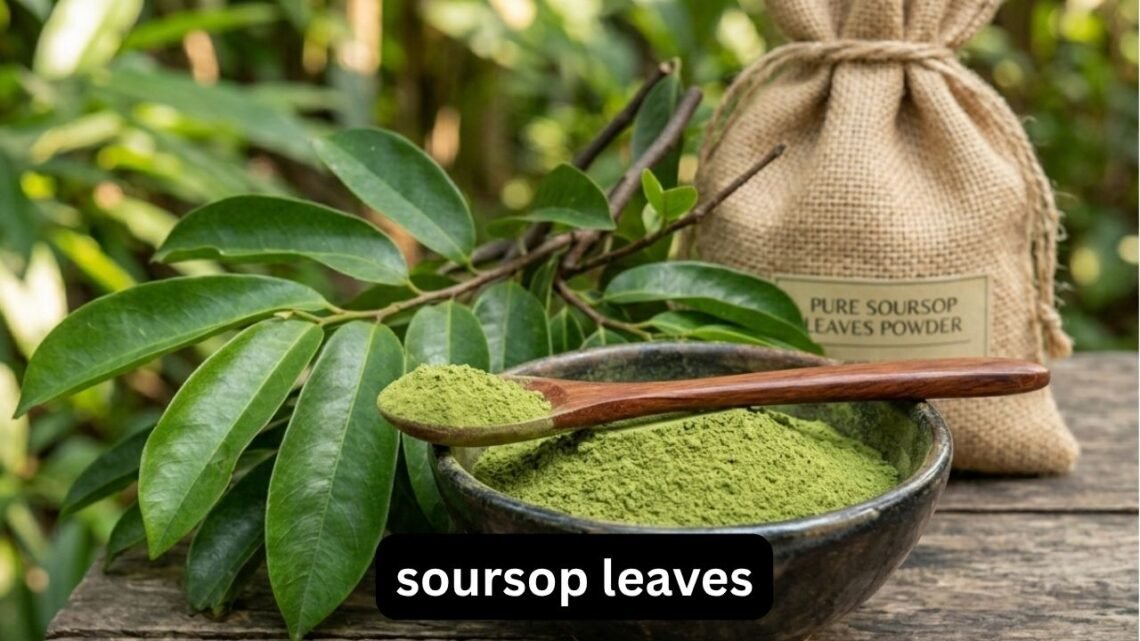
Soursop leaves have become increasingly popular as a home remedy, especially among people looking for natural ways to support blood sugar, inflammation, digestion, sleep, or general wellness. You may have seen advice about drinking soursop leaf tea, using dried soursop leaves, or taking concentrated leaf supplements. But there is an important distinction between what traditional medicine has used soursop leaves for and what modern research has actually proved.
Soursop, also called graviola or Annona muricata, contains several biologically active compounds, including acetogenins, alkaloids and flavonoids. Laboratory and animal research suggests that some of these compounds may have antioxidant, anti-inflammatory, antimicrobial and blood-glucose-lowering effects. However, strong human clinical evidence for most claimed health benefits is still limited.
This guide explains the 15 commonly discussed soursop leaves benefits, how dried leaves and tea differ from concentrated extracts, and—most importantly—the potential side effects and safety concerns that are often overlooked.
What Are Soursop Leaves?
Soursop leaves come from the tropical fruit tree Annona muricata. The plant is known as soursop, graviola or guanabana depending on the region.
Traditionally, the leaves have been prepared as teas or decoctions rather than eaten as a conventional vegetable. Modern supplements may contain dried leaves, powders, capsules or concentrated extracts.
That distinction matters.
A cup of traditionally prepared leaf tea is not chemically equivalent to a concentrated supplement. The amount of active compounds can vary considerably depending on:
- The age and condition of the leaves
- How much leaf is used
- Whether the leaves are fresh or dried
- How long they are boiled or steeped
- The extraction method
- The concentration of the final product
Research reviews have found studies involving several different types of soursop leaf preparations, including aqueous, ethanolic and other extracts, making it difficult to apply results from one preparation directly to another.
15 Potential Health Benefits of Soursop Leaves
The word potential is important here. Most evidence comes from laboratory or animal research rather than large, well-controlled human trials.
1. Antioxidant Support
Soursop leaves contain plant compounds with antioxidant activity. Antioxidants can help protect cells from oxidative stress caused by reactive molecules.
Laboratory research has identified flavonoids and other phytochemicals in Annona muricata that may contribute to this activity.
However, antioxidant activity measured in a laboratory does not automatically mean that drinking soursop tea will prevent a particular disease.
2. May Help Moderate Inflammation
Inflammation is a normal part of the immune response, but excessive or persistent inflammation can contribute to many health problems.
Animal research involving soursop preparations has demonstrated anti-inflammatory activity. Some studies have also investigated analgesic effects.
For everyday use, it is better to think of soursop tea as a traditional beverage rather than a replacement for established anti-inflammatory treatment.
3. May Support Healthy Blood Sugar
One of the more frequently searched soursop leaves benefits is blood-sugar support.
Animal studies have reported antidiabetic effects from Annona muricata extracts. Possible mechanisms include antioxidant effects and influences on glucose metabolism.
The practical caution is important: if someone already takes diabetes medication, adding a potentially glucose-lowering herbal preparation could make blood sugar fall too far.
4. May Influence Blood Pressure
Research in animals has suggested that soursop preparations may have blood-pressure-lowering effects.
This sounds beneficial, but it is not automatically safe for everyone.
Someone taking antihypertensive medication could potentially experience excessive blood-pressure lowering. Medical guidance is particularly important if you already have low blood pressure or take prescription medication.
5. Possible Antimicrobial Activity
Soursop leaf extracts have demonstrated antimicrobial activity in laboratory research.
This has contributed to traditional uses of the plant for infections. But laboratory antimicrobial activity should not be interpreted as proof that soursop leaf tea can cure a bacterial, viral or fungal infection in humans.
If you have an actual infection, appropriate diagnosis and treatment remain important.
6. May Support Digestive Comfort
Traditional medicine has used soursop leaves for digestive complaints, and animal research has investigated anti-ulcer and gastroprotective effects.
Some experimental studies found that leaf preparations protected against experimentally induced gastric injury.
Still, there is not enough human evidence to recommend soursop leaves as a treatment for ulcers, gastritis or chronic digestive disease.
7. Possible Pain-Relieving Effects
Experimental research has found analgesic activity from Annona muricata preparations.
This is one reason traditional preparations have sometimes been used for general aches and discomfort.
But persistent or severe pain should not simply be masked with an herbal remedy. The underlying cause may require medical attention.
8. May Have Liver-Protective Properties
Some experimental research has investigated hepatoprotective effects of soursop preparations. A systematic review identified hepatoprotective effects among the reported findings.
This does not mean soursop leaves detoxify the liver or treat liver disease.
In fact, the evidence is complicated enough that taking concentrated herbal extracts for a long period without medical supervision is not a sensible approach.
9. May Affect Stomach Protection
Soursop leaf extracts have been studied for gastroprotective effects in animal models. One proposed mechanism involves changes in pathways associated with protection of stomach tissue.
This is interesting scientifically, but the evidence remains preliminary.
10. Possible Antiviral Activity
Some laboratory studies have examined antiviral activity associated with compounds from Annona muricata. Reviews of the plant’s pharmacological activity have identified antiviral effects among experimental findings.
The key limitation is that test-tube activity does not establish an effective dose or treatment in people.
11. Possible Anticancer Activity in Laboratory Research
This is probably the most exaggerated claim associated with soursop leaves.
Soursop leaf, fruit and seed extracts have shown activity against several cancer cell lines in laboratory experiments.
But there is no good evidence that soursop leaves cure cancer in humans. Laboratory cancer-cell research is an early stage of scientific investigation, not proof of an effective cancer treatment.
Anyone with cancer should not replace chemotherapy, radiation, surgery or other prescribed treatment with soursop products.
12. May Have Anti-Ulcer Potential
Animal research has specifically examined soursop leaves in models of experimentally induced gastric ulcers and reported protective effects.
This may eventually help researchers identify useful compounds, but it is too early to conclude that drinking soursop leaf tea treats human ulcers.
13. May Have Antiparasitic Potential
Reviews of Annona muricata research have identified antiprotozoal activity among experimental findings.
Traditional use should not be confused with proven treatment. Suspected parasitic infections should be diagnosed properly because different parasites require different medications.
14. May Have Neuroactive Effects
This is an unusual benefit to discuss because it is also part of the safety story.
Some compounds in soursop leaves can interact with biological pathways involved in the nervous system. Researchers have observed neuroactive effects in experimental studies.
That means “natural” does not necessarily mean biologically mild. A substance capable of producing neurological effects deserves caution, especially when consumed in concentrated or prolonged forms.
15. May Provide General Herbal Wellness Value
For some people, the appeal of soursop leaf tea is simply that it is a traditional, plant-based drink.
If someone chooses to drink a mild preparation occasionally, the realistic expectation should be modest: it is an herbal beverage, not a proven treatment for multiple diseases.
That distinction prevents many of the unrealistic claims commonly associated with soursop leaves.
Soursop Leaves vs Dried Soursop Leaves
Fresh and dried leaves are not necessarily interchangeable.
Dried leaves have lost their water content, so a given weight of dried material represents more plant matter than the same weight of fresh leaves. Drying and storage can also influence the chemical composition of plant material.
A particularly important practical point is that “more concentrated” is not automatically “more beneficial.”
A homemade tea, dried-leaf powder and standardized extract can expose the body to very different amounts of active compounds.
This is one reason research results cannot be used to establish a universal “best dose” of soursop leaves.
Soursop Leaves Side Effects and Safety
The safety question deserves as much attention as the claimed benefits.
Research on Annona muricata has raised concerns about acetogenins and their potential effects on the nervous system. A European risk assessment concluded that substantial uncertainty remains around the safe long-term use of soursop-based supplements and that available evidence indicates potential neurotoxicity for some preparations.
A systematic review also found conflicting experimental findings, including both potentially protective and potentially harmful effects involving the kidneys, as well as neurotoxic findings in some studies.
Potential concerns include:
- Excessive lowering of blood sugar
- Excessive lowering of blood pressure
- Possible neurological effects
- Possible kidney concerns with certain preparations or doses
- Drug interactions
- Uncertainty about long-term concentrated use
The evidence does not establish that ordinary occasional tea consumption will cause these problems. The concern is particularly relevant to concentrated products, high doses and prolonged use.
Who Should Be Especially Careful?
Soursop leaf products deserve extra caution if you:
Take diabetes medication
Because soursop may influence blood glucose, combining it with glucose-lowering medication could potentially increase the risk of hypoglycemia.
Take blood-pressure medication
Soursop may lower blood pressure, so combining preparations with antihypertensive drugs could potentially produce an excessive effect.
Are pregnant
Safety during pregnancy has not been adequately established. Avoiding medicinal doses of herbal products during pregnancy unless specifically recommended by a qualified healthcare professional is the safer approach.
Have a neurological condition
Because acetogenins and other compounds have raised neurological safety questions, people with neurological disorders or concerns about neurodegenerative disease should be particularly cautious about long-term concentrated use.
Are preparing for medical imaging
Soursop products may interfere with some medical imaging procedures, so tell your healthcare team about herbal supplements you use.
A Practical Mistake: Assuming Tea and Extract Are the Same
This is one of the most useful things to understand before trying soursop leaves.
Imagine two people.
Person A occasionally drinks a traditionally prepared cup of soursop leaf tea.
Person B takes capsules containing a concentrated leaf extract every day.
Both may say they are “taking soursop leaves,” but chemically and pharmacologically, those products may be very different.
The second person may be receiving a much higher and less predictable exposure to active compounds.
This is why supplement labels, extraction methods and serving sizes matter more than the simple word “natural.”
What About Soursop Leaves in the UK?
People searching for soursop leaves UK benefits may find dried leaves, tea bags, powders and supplements sold through specialist food and herbal-product retailers.
The same safety principles apply in the UK as elsewhere: availability does not prove medical effectiveness.
A product being sold as a food or supplement does not mean that it has been clinically proven to treat diabetes, cancer, high blood pressure or another disease.
If you are taking medication, especially for blood sugar or blood pressure, discuss regular use with a healthcare professional before starting a concentrated soursop preparation.
Common Mistakes to Avoid
Mistake 1: Treating “15 benefits” as 15 proven treatments
The number of claimed benefits can make soursop leaves sound extensively proven. In reality, evidence ranges from laboratory experiments to animal studies, with relatively little robust human clinical research.
Mistake 2: Drinking stronger tea because it seems healthier
More leaves and longer boiling do not necessarily mean greater health benefits. They may simply increase exposure to biologically active compounds.
Mistake 3: Using soursop instead of prescribed treatment
This is particularly dangerous for cancer, diabetes, hypertension and infections.
Mistake 4: Ignoring duration
A product that seems tolerable for a few days cannot automatically be assumed safe for months or years. Long-term safety remains an important research gap.
Mistake 5: Assuming dried leaves are harmless
Drying removes water; it does not remove the plant’s active compounds.
Three Less-Discussed Insights About Soursop Leaves
1. The preparation may matter as much as the plant
Researchers do not study one universal “soursop leaf.” They study aqueous extracts, ethanolic extracts, dried leaves and other preparations. Consequently, saying “research proves soursop leaves work” can be misleading because the preparation and dose may be completely different from what someone makes at home.
2. A potential benefit and a potential risk can come from the same chemistry
The compounds that make a plant biologically active are not automatically harmless. Soursop’s acetogenins are being studied for biological effects, but they have also raised concerns about neurotoxicity.
That is a useful general lesson for herbal medicine: biological activity is not the same thing as safety.
3. “Natural” makes dose awareness more important, not less
Prescription medicines normally have standardized active ingredients and dosing instructions. Home-prepared herbal products can vary considerably in strength.
For soursop leaves, that variability makes it especially difficult to establish how much is appropriate for long-term use.
FAQ
Are soursop leaves good for you?
Soursop leaves contain biologically active plant compounds and have shown antioxidant, anti-inflammatory, antimicrobial and other effects in laboratory and animal research. However, most of these benefits have not been firmly demonstrated in large human clinical trials. They should therefore be viewed as a traditional herbal preparation rather than a proven treatment.
What are the benefits of drinking soursop leaf tea?
Soursop leaf tea is traditionally used for general wellness and various health complaints. Experimental research suggests possible antioxidant, anti-inflammatory, blood-glucose, blood-pressure and digestive effects. However, evidence is not strong enough to claim that the tea treats specific diseases.
Are dried soursop leaves better than fresh leaves?
Not necessarily. Drying changes the concentration of plant material by removing water, and different preparation methods can extract different compounds. There is no established evidence showing that dried leaves are universally healthier than fresh leaves.
What are the side effects of soursop leaves?
Potential concerns include effects on blood sugar and blood pressure, medication interactions and possible neurological toxicity associated with compounds found in Annona muricata. Long-term safety of concentrated soursop supplements remains uncertain.
Can soursop leaves cure cancer?
No. Although laboratory studies have found anticancer activity in soursop extracts against cancer cells, there is no strong clinical evidence that soursop leaves cure cancer in humans. Soursop should not replace evidence-based cancer treatment.
Can I drink soursop leaf tea every day?
There is not enough evidence to establish a universally safe long-term daily dose. This is particularly important with concentrated preparations because the amount of active compounds can vary. If you plan regular use, especially while taking medication, discuss it with a healthcare professional.
Conclusion
Soursop leaves are an interesting traditional herbal remedy with genuine biological activity, but their reputation has moved faster than the human evidence.
Research suggests potential antioxidant, anti-inflammatory, antimicrobial, digestive, blood-sugar and blood-pressure effects, while laboratory studies have also generated interest in anticancer properties. Yet most of these findings come from laboratory or animal research rather than convincing clinical trials in people.
The other half of the story is safety. Soursop contains acetogenins and other compounds that warrant caution, particularly with concentrated products and long-term use. Current evidence does not provide a reliable universal safe intake level for soursop-based supplements.
The most sensible approach is to treat soursop leaves as a traditional herbal product—not a cure-all. If you take medication or intend to use concentrated soursop products regularly, checking with a healthcare professional is a much safer choice than simply assuming that natural means risk-free.