
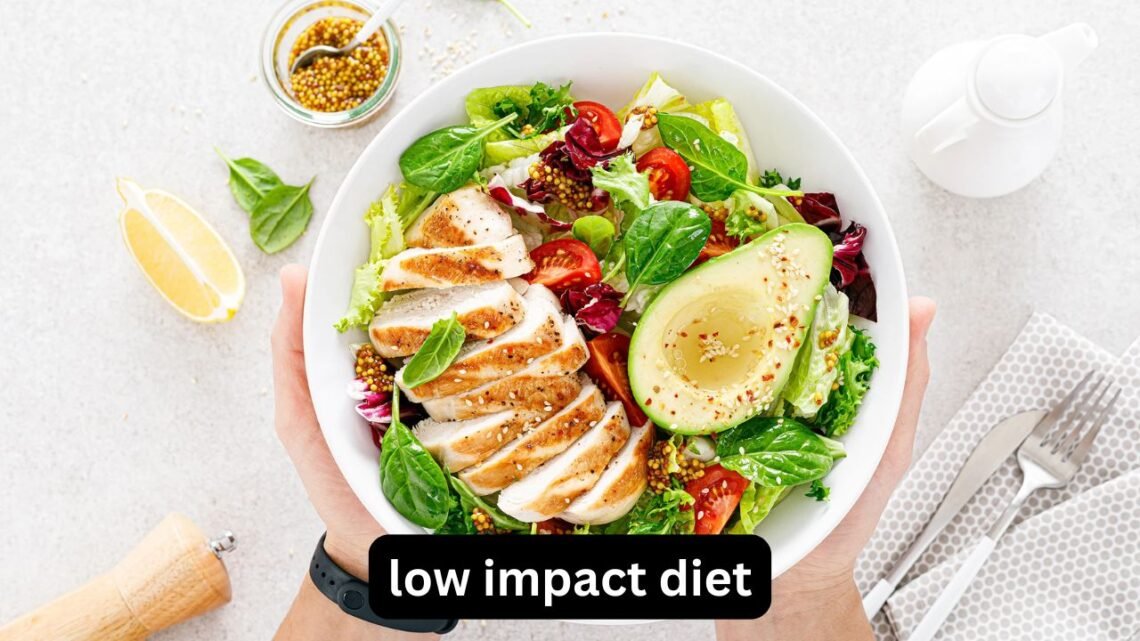
A diet does not have to mean tiny portions, complicated recipes, or giving up every food you enjoy. For many people, the real challenge is finding an eating pattern that feels sustainable while still supporting weight management, energy, digestion, and long-term health. That is where a low impact diet can be useful.
The phrase can mean different things depending on context. Some people use it to describe a gentle, minimally restrictive approach to eating that reduces digestive discomfort or makes everyday meals easier to manage. Others use it to mean a diet with a lower environmental impact, focusing on foods that require fewer natural resources to produce. Because of that overlap, simply searching for a list of “low impact foods” can lead to confusing or conflicting advice.
This guide explains the practical meaning of a low impact diet, how to build one without unnecessary restriction, which foods tend to work well, common mistakes to avoid, and how to adapt the approach to real life. The goal is not perfection. It is creating meals that are nutritious, realistic, and easy to maintain.
What Is a Low Impact Diet?
A low impact diet is not one universally defined medical diet. The term is generally used for an eating approach designed to reduce a particular type of “impact,” such as digestive strain, excessive dietary restriction, or environmental burden.
The important first step is identifying what you want to improve.
Low impact for digestion
When the term is used in a digestive context, people may be looking for meals that are relatively gentle on the stomach and easier to tolerate. Depending on the individual, this can involve:
- Eating smaller meals rather than very large portions
- Choosing simply prepared foods
- Limiting foods that personally trigger bloating or discomfort
- Reducing very fatty, spicy, or heavily processed meals
- Eating slowly and chewing thoroughly
- Keeping a consistent meal schedule
There is no universal “gentle food” list because digestive tolerance varies considerably.
Low impact for the environment
In sustainability discussions, a low impact diet usually means choosing foods and eating habits that have a smaller environmental footprint.
This may involve eating more:
- Beans and lentils
- Whole grains
- Seasonal vegetables
- Fruits
- Nuts and seeds in sensible portions
- Locally available foods
- Plant-based meals
It can also mean reducing food waste and relying less heavily on foods with particularly resource-intensive production.
These two interpretations can overlap, but they are not the same diet. A food that is environmentally sustainable may not suit someone’s digestion, while a food that is gentle on the stomach may not have the lowest environmental footprint.
What Should You Eat on a Low Impact Diet?
Rather than memorizing a rigid list, build meals around a few dependable categories.
1. Choose a practical protein source
Protein helps meals feel satisfying and supports muscle maintenance.
Depending on your goals and tolerance, options can include:
- Eggs
- Fish
- Chicken
- Yogurt
- Tofu
- Beans
- Lentils
- Peas
- Nuts and seeds
If digestive comfort is your priority, preparation can matter as much as the ingredient itself. For example, grilled or baked chicken may feel very different from heavily fried chicken.
2. Add carbohydrates that fit your needs
Carbohydrates are not automatically “high impact” foods. They can provide useful energy, particularly for active people.
Good everyday choices include:
- Oats
- Rice
- Potatoes
- Whole-grain bread
- Barley
- Quinoa
- Pasta
- Corn
If you experience digestive symptoms, however, the amount of fiber and the way a carbohydrate is prepared may influence how comfortable you feel.
3. Include vegetables and fruit
Vegetables and fruit provide vitamins, minerals, fiber, and other beneficial plant compounds.
A practical approach is to use several colors throughout the week rather than obsessing over one “superfood.”
For example:
Breakfast: oats with banana and yogurt
Lunch: rice, chicken, and cooked vegetables
Snack: fruit with a small handful of nuts
Dinner: lentil soup with bread and a vegetable side
The meals are ordinary—and that is precisely the point. A sustainable diet usually works better when it resembles normal food rather than a temporary challenge.
How to Build a Low Impact Meal
A simple meal-building formula can make the concept easier.
Start with:
Protein + carbohydrate + plants + optional healthy fat
For example:
- Chicken + rice + vegetables + olive oil
- Lentils + potatoes + salad + yogurt
- Tofu + noodles + mixed vegetables + sesame seeds
- Fish + potatoes + cooked greens
You do not need every component at every meal. Think of the formula as a flexible starting point.
Portion size matters more than many people realize
One overlooked issue is that even nutritious foods can become uncomfortable when portions are much larger than your appetite requires.
For someone trying to reduce digestive strain, a huge bowl of beans, vegetables, and whole grains may actually be harder to tolerate than a smaller, balanced meal.
For someone focused on environmental impact, portion awareness can also reduce food waste.
A useful principle: improve the meal before dramatically shrinking the meal.
Low Impact Diet for Weight Management
A low impact approach can support weight management, but it should not automatically be treated as a weight-loss diet.
Weight change depends heavily on overall energy intake, activity, sleep, appetite, and individual circumstances.
Instead of trying to eliminate entire food groups, consider making small changes that reduce excess calories without making meals miserable.
For example:
Instead of:
A large takeaway meal, sugary drink, fries, and dessert.
Try:
A normal portion of the main meal, water or another low-calorie drink, and fruit if you still want something sweet.
Similarly, you could replace frequent fried meals with grilled or baked versions without eliminating the foods entirely.
This approach tends to be easier to maintain because it changes the pattern, not your entire lifestyle.
A Low Impact Diet for Sensitive Digestion
If your reason for exploring this diet is bloating, indigestion, or feeling uncomfortable after meals, be careful about making too many changes at once.
Start with a food-and-symptom diary for several days.
Record:
- What you ate
- Approximate portion size
- Time of the meal
- How quickly you ate
- Symptoms afterward
- Sleep and activity that day
This can reveal patterns that are easy to miss.
An important insight: preparation can matter as much as the food
People often label an ingredient as “bad” when the real issue may be quantity or preparation.
For example, someone may tolerate a small serving of cooked vegetables but struggle after eating a large raw salad. Another person may tolerate baked potatoes but feel uncomfortable after heavily fried potatoes.
That does not necessarily mean the ingredient itself is the problem.
Before eliminating a food completely, consider testing the portion and preparation method.
If symptoms are persistent, severe, unexplained, or associated with weight loss, bleeding, repeated vomiting, difficulty swallowing, or significant pain, professional medical advice is more appropriate than experimenting with increasingly restrictive diets.
Is a Low Impact Diet the Same as a Low-Fiber Diet?
No.
This distinction is important.
A low-fiber diet is a specific dietary approach sometimes used for particular medical situations under professional guidance. A low impact diet, by contrast, is not a standardized medical diet.
Someone may choose easily digested foods temporarily and reduce certain high-fiber foods, but that does not mean everyone following a low impact approach should avoid fiber.
For many healthy adults, fiber is an important part of a balanced diet.
The right amount depends on the person, their diet, tolerance, and health circumstances.
Low Impact Diet vs. Highly Restrictive Diets
A useful way to judge a diet is to ask what happens after the first month.
| Low-impact approach | Highly restrictive approach |
|---|---|
| Flexible food choices | Long list of forbidden foods |
| Adjusts to individual tolerance | Assumes the same foods work for everyone |
| Focuses on sustainable habits | Often emphasizes rapid results |
| Allows normal social meals | Can make eating socially difficult |
| Can be adapted over time | May become difficult to maintain |
This does not mean every restrictive diet is inherently wrong. Certain medical conditions genuinely require dietary restrictions.
The problem is unnecessary restriction without a clear reason.
Three Less-Obvious Insights That Can Make the Diet Work Better
1. Your “impact” may come from the eating pattern, not one food
People often search for the single food causing a problem. In practice, the combination may matter more.
A very large meal eaten quickly, followed by lying down, may cause more discomfort than the same ingredients eaten slowly in a moderate portion.
Likewise, environmental impact is influenced by the entire food system and household behavior—not simply whether one ingredient is labeled “good” or “bad.”
2. Repetition can be useful
Variety is valuable, but you do not need a completely different meal every day.
Having five or six dependable meals can reduce decision fatigue, simplify shopping, and make it easier to notice how your body responds to food.
A simple rotation might include:
- Oats and fruit
- Eggs and whole-grain toast
- Rice with chicken and vegetables
- Lentil soup and bread
- Fish with potatoes and vegetables
- Yogurt with fruit and nuts
You can change seasonings and ingredients without rebuilding your entire diet.
3. “Low impact” should not become “low nutrition”
This is one of the easiest traps.
Someone may cut out dairy, grains, meat, legumes, nuts, and many fruits and vegetables in an attempt to avoid discomfort or eat more sustainably. Eventually, the diet becomes extremely narrow.
A better approach is to ask:
What is the smallest change that solves the actual problem?
That question often prevents unnecessary restriction.
Common Low Impact Diet Mistakes
Eliminating foods too quickly
Removing ten foods simultaneously makes it difficult to identify what actually caused a problem.
Assuming healthy means universally tolerable
Nutritionally valuable foods can still cause discomfort for certain people or in certain quantities.
Ignoring portion size
A food may be perfectly reasonable in a moderate portion but uncomfortable or calorie-dense in a very large serving.
Depending on packaged “diet foods”
Low-impact eating does not require expensive specialty products. Basic foods such as rice, oats, potatoes, beans, vegetables, eggs, and fruit can form the foundation of affordable meals.
Expecting immediate results
Changes in digestion, appetite, weight, or energy can take time. Constantly changing your diet makes it harder to understand what is working.
How to Start a Low Impact Diet Without Overcomplicating It
If you want to experiment with the approach, start small.
Step 1: Define your goal
Are you trying to improve digestion, manage weight, reduce food waste, eat more sustainably, or simply create a simpler eating routine?
Step 2: Keep your normal meals
Identify two or three meals you already enjoy.
Step 3: Make one improvement
Reduce excessive frying, add vegetables, moderate the portion, replace a sugary drink, or choose a more sustainable protein.
Step 4: Observe the result
Give the change enough time to evaluate rather than changing everything the next day.
Step 5: Build a repeatable routine
The best diet is usually the one you can follow when you’re busy, traveling, tired, or eating with other people.
Sample One-Day Low Impact Meal Plan
Here is a flexible example rather than a prescription:
Breakfast
Oatmeal with banana, yogurt, and a small amount of nuts.
Lunch
Rice with grilled chicken and cooked vegetables.
Snack
Fruit and yogurt.
Dinner
Lentil soup with potatoes or whole-grain bread and vegetables.
Drinks
Water, tea, or another beverage that fits your personal needs.
If you are following the approach for digestive reasons, you may need to adjust ingredients, fiber levels, portion sizes, or preparation methods according to your individual tolerance.
If your goal is environmental sustainability, increasing plant-based meals and reducing food waste can be more meaningful than trying to find a perfect “low-impact” menu.
Who Should Be Careful With a Low Impact Diet?
A generalized diet should not replace individualized medical nutrition advice.
Speak with a qualified healthcare professional or registered dietitian if you have a diagnosed digestive disorder, unexplained ongoing symptoms, significant unintended weight change, nutritional deficiencies, pregnancy-related nutritional needs, or a condition requiring a specialized diet.
Children and older adults may also have different nutritional requirements, so aggressive dietary restriction is particularly inappropriate without professional guidance.
FAQ
What foods are best for a low impact diet?
There is no universal list because “low impact” can refer to digestion, sustainability, or another personal goal. Generally, minimally processed foods such as oats, rice, potatoes, vegetables, fruit, legumes, eggs, fish, poultry, and suitable plant proteins can form a balanced foundation. The best choices depend on your nutritional needs, preferences, budget, and tolerance.
Can a low impact diet help you lose weight?
It can support weight management when it helps you eat appropriate portions and reduces excess calories without making the diet difficult to maintain. However, “low impact” does not automatically mean low calorie. Overall eating patterns, activity, sleep, and energy intake remain important.
Is a low impact diet good for digestion?
It may be helpful for some people if it encourages moderate portions, slower eating, simpler preparation, and identification of individual trigger foods. However, there is no single low impact diet that works for every digestive problem. Persistent or severe symptoms should be assessed professionally rather than managed through increasingly restrictive eating.
Is low impact the same as low carb?
No. A low impact diet does not automatically require cutting carbohydrates. Rice, oats, potatoes, whole grains, and other carbohydrate-containing foods can fit comfortably into a balanced eating pattern.
What is the easiest way to start a low impact diet?
Start with one goal and make one or two changes rather than rebuilding your entire diet. Choose simple meals containing a protein source, a carbohydrate, and plant foods, then adjust portions or preparation based on your needs. A routine you can repeat consistently is more useful than a complicated seven-day plan you abandon after a week.
Conclusion
A low impact diet works best when you treat it as a practical framework rather than a strict rulebook. The goal is to reduce whatever “impact” matters to you—whether that means digestive discomfort, excessive calories, food waste, or environmental pressure—while still getting enough nutrition and enjoying your meals.
Focus on simple foods, sensible portions, appropriate preparation, and gradual changes. Most importantly, do not assume that every food needs to be labeled good or bad. Your overall eating pattern, individual tolerance, and ability to maintain the routine matter far more.
Start with one meal, make one useful improvement, and pay attention to what actually happens. That is often a much more effective path than chasing the perfect diet.