If your skin feels tight after washing, your hair looks dry despite using conditioner, or you want a simple plant oil for everyday care, sweet almond oil is worth understanding before you buy a bottle. It is widely used in skin and hair products because it is lightweight, rich in fatty acids, and generally easy to spread.
But not every bottle is the same. “Sweet almond oil,” “organic sweet almond oil,” and cosmetic-grade almond oil can differ in processing, ingredients, scent, and intended use. And while almond oil can make skin and hair feel softer, some popular claims about it go much further than the evidence supports.
This guide explains what sweet almond oil actually does, how to use it for skin and hair, what to look for on the label, how it compares with other almond oils, and which mistakes can make an otherwise useful oil irritating or inconvenient.
What Is Sweet Almond Oil?
Sweet almond oil is a plant oil extracted from the kernels of sweet almonds, usually from Prunus dulcis. It is primarily an emollient, meaning it helps soften the skin and reduce the feeling of dryness by adding oil to the skin’s surface.
It contains a mixture of fatty acids, particularly:
- Oleic acid
- Linoleic acid
- Palmitic acid
- Smaller amounts of other fatty acids
- Vitamin E and other naturally occurring antioxidant compounds
The important point is that sweet almond oil is not the same thing as almond essential oil. Sweet almond oil is a carrier oil used directly on skin and hair, while essential oils are highly concentrated aromatic substances that are normally diluted before topical use.
Sweet almond oil vs. almond oil
The phrase “almond oil” can be confusing because it may refer broadly to oil derived from almonds. When shopping for skincare, “sweet almond oil” usually identifies the edible sweet-almond variety used as a cosmetic carrier oil.
If a product simply says “almond oil,” check the ingredient list and product description rather than assuming it is identical to a bottle specifically labeled sweet almond oil.
Sweet Almond Oil Benefits for Skin
One reason sweet almond oil remains popular is its straightforward function: it helps replenish the oily component of dry-feeling skin.
1. It can soften dry skin
Sweet almond oil forms a thin lipid layer over the skin. This can make rough or flaky areas feel smoother and more comfortable.
For particularly dry hands, elbows, knees, or legs, applying a small amount after bathing can be more useful than putting oil onto completely dry skin.
Practical tip: Apply it while the skin is still slightly damp. The oil helps slow moisture loss, rather than supplying water itself.
2. It can support the skin barrier
Healthy skin needs a balanced barrier to reduce excessive water loss and protect against environmental stress. Oils can contribute to the skin’s surface lipid layer and improve how dry skin feels.
However, sweet almond oil should not be treated as a cure for eczema, dermatitis, psoriasis, or other skin diseases. Persistent redness, itching, cracking, or inflammation deserves proper medical evaluation.
3. It may make skin feel smoother
Unlike some heavier oils, sweet almond oil spreads relatively easily. This makes it useful for body massage and for people who dislike extremely thick creams.
A few drops can cover a surprisingly large area, so starting with less is usually better.
4. It contains vitamin E
Sweet almonds naturally contain vitamin E-related antioxidant compounds, and some of these remain in the oil depending on how it is processed.
That sounds impressive on a label, but it is important not to confuse “contains vitamin E” with “reverses aging.” Sweet almond oil is best viewed as a moisturizing cosmetic ingredient, not a miracle anti-aging treatment.
Sweet Almond Oil Skin Benefits: Who May Like It?
Sweet almond oil can be particularly practical for people dealing with:
- Dry or rough body skin
- Dry hands and feet
- Skin that feels tight after bathing
- Rough cuticles
- Massage
- Dry patches that need an occlusive layer
It may be less suitable for someone whose facial skin is easily congested or who reacts to almond-derived ingredients.
A useful face-care test
If you want to try sweet almond oil on your face, don’t begin by covering your entire face with it.
Instead:
- Apply a small amount to a limited area.
- Leave it alone for a day or two.
- Watch for itching, burning, redness, or new bumps.
- If your skin tolerates it, gradually introduce it into your routine.
This is especially sensible if you have sensitive skin or a history of cosmetic reactions.
Sweet Almond Oil for Hair
Sweet almond oil is also popular as a hair oil because it can make dry-looking hair feel smoother and easier to manage.
The effect is mostly cosmetic: the oil coats the hair fiber, reducing friction and improving softness and shine.
What can it do for hair?
Used appropriately, sweet almond oil may help:
- Reduce the rough feel of dry hair
- Improve shine
- Make strands feel smoother
- Reduce friction during brushing
- Condition dry ends
- Make detangling easier
It does not automatically make hair grow faster. Hair growth is controlled primarily by biology at the follicle, and applying an oil to the hair shaft is very different from treating the causes of hair loss.
How to use sweet almond oil on hair
For fine hair, begin with only a few drops.
Warm the oil between your palms and lightly smooth it over the mid-lengths and ends. Leave it for a period that suits your routine, then shampoo if necessary.
For thicker or very dry hair, you can use more, but “more oil” does not necessarily mean “more conditioning.”
A common real-world mistake: people apply a large amount because their hair feels dry, then spend the next wash trying to remove the excess. Start small and add more only when necessary.
Organic Sweet Almond Oil: Is It Better?
Organic sweet almond oil generally refers to oil made from almonds grown under an organic agricultural certification system. Whether that makes it better for your particular skin or hair depends on what you value.
Organic certification does not automatically mean:
- More moisturizing
- More effective for hair growth
- Safer for every person
- Free from allergens
- Better for acne-prone skin
If organic sourcing matters to you, look for a legitimate certification appropriate to the country where the product is sold.
For cosmetic performance, other factors can be equally important, such as freshness, processing, packaging, and whether the bottle contains unnecessary added fragrance.
How to Choose a Sweet Almond Oil Bottle
The bottle itself can tell you quite a bit about how seriously a product is designed for cosmetic use.
Look for a short ingredient list
For a pure oil, the ingredient list may simply identify sweet almond oil, sometimes using its botanical name.
If you’re specifically looking for pure sweet almond oil, be cautious about products containing a long list of fragrances, mineral oils, dyes, or other ingredients unless you deliberately want a blended product.
Consider the packaging
Oil can deteriorate when repeatedly exposed to heat, light, and air.
A dark or opaque cosmetic bottle can help limit light exposure. A pump or controlled dispenser can also reduce repeated handling and accidental over-pouring.
This is one of those small details that matters more in daily use than flashy marketing claims.
Check the date and storage instructions
Natural oils don’t remain fresh forever.
Store your bottle according to the manufacturer’s instructions and keep it away from excessive heat and direct sunlight. If the smell changes noticeably or becomes unpleasant, don’t assume that adding fragrance will fix it—replace the oil.
Cold-Pressed vs. Refined Sweet Almond Oil
You may see both cold-pressed and refined versions.
Cold-pressed oils are mechanically extracted with relatively little heat compared with some industrial extraction methods. They may retain more of the oil’s naturally occurring minor compounds and have a more noticeable natural scent.
Refined oil is processed further and may have a lighter color and more neutral odor.
Neither choice is automatically right for everyone.
If you’re using sweet almond oil primarily as a simple moisturizer or massage oil, texture, freshness, purity, and your own skin response may matter more than the extraction label alone.
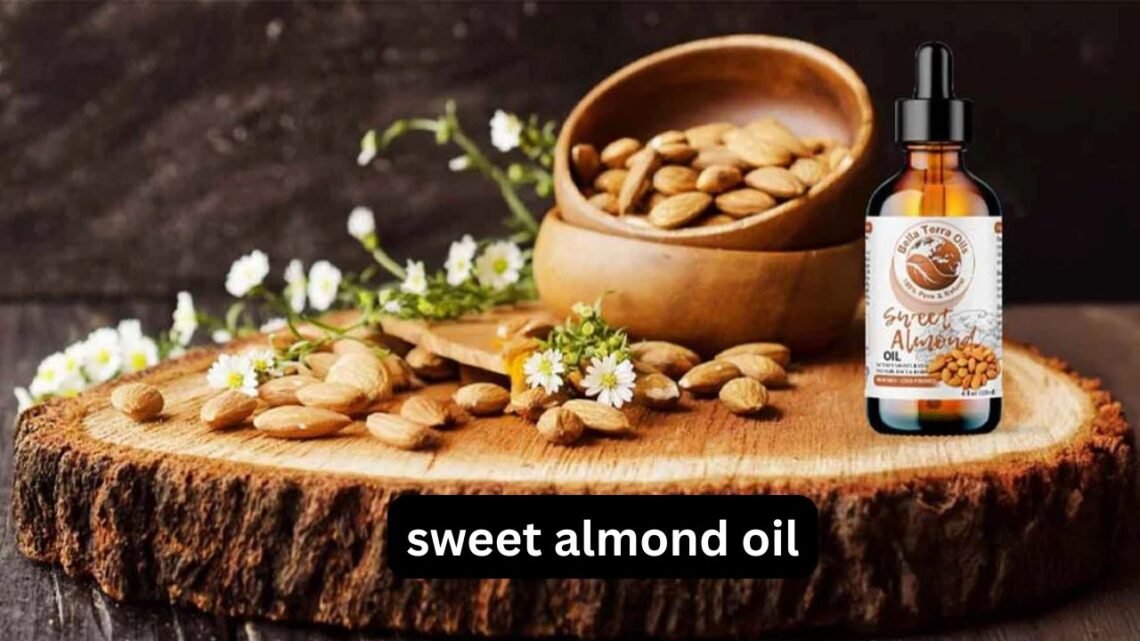
Sweet Almond Oil Cosmetic Bottle: What Should It Contain?
A cosmetic bottle marketed for topical use should make its intended purpose clear.
Before buying, check:
- Ingredient: Is it actually sweet almond oil?
- Purity: Is it 100% oil or a blend?
- Fragrance: Is perfume added?
- Processing: Cold-pressed, refined, or unspecified?
- Packaging: Does it protect the oil from light?
- Expiration or best-before information: Is it clearly provided?
- Instructions: Does the manufacturer explain topical use and storage?
Don’t choose a product simply because the bottle looks premium. Packaging is useful, but the ingredient label tells you much more.
Three Less-Discussed Things About Sweet Almond Oil
1. Your skin may need water before it needs oil
People often apply oil to extremely dry skin and wonder why the result is disappointing.
Oil does not replace water. If your skin is dehydrated, applying a moisturizer containing water-based ingredients first and then using a small amount of oil can make more sense.
Think of the oil as helping hold onto moisture, not as pouring moisture into the skin.
2. The best amount is often surprisingly small
A bottle of sweet almond oil can last much longer than expected because a thin layer is usually enough.
Using too much can leave skin greasy and hair heavy without providing proportionally greater benefits.
3. Hair “growth” and hair “condition” are different problems
This distinction is often lost in online beauty advice.
If sweet almond oil makes hair smoother and reduces breakage from combing, your hair may appear healthier over time. That’s different from stimulating new growth from the follicle.
Understanding this difference prevents unrealistic expectations.
Common Mistakes When Using Sweet Almond Oil
Using too much on the face
A few drops may be enough. Applying a thick layer can feel greasy and may not suit acne-prone skin.
Applying it to irritated skin without testing
“Natural” does not mean “allergy-proof.” Almond-derived products can cause problems for people with relevant allergies.
Expecting it to cure hair loss
Oil can condition hair but shouldn’t be substituted for evaluation of persistent or sudden hair loss.
Buying based only on the word “organic”
Organic certification is useful for sourcing preferences, but it doesn’t guarantee that the product will suit your skin.
Keeping the bottle in a hot bathroom
Frequent heat and humidity aren’t ideal storage conditions for many plant oils. A cool, dark cupboard is generally more sensible when the label permits it.
Sweet Almond Oil vs. Other Common Oils
There is no universal “best” carrier oil. Different oils have different textures and fatty-acid profiles.
| Oil | Typical feel | Often chosen for |
|---|---|---|
| Sweet almond oil | Light to medium | Body care, massage, dry hair |
| Jojoba oil | Lightweight, wax-like | Facial and scalp products |
| Coconut oil | Heavier, more coating | Hair conditioning, body care |
| Argan oil | Lightweight | Hair and skin finishing |
| Olive oil | Richer, heavier | Body care and some hair routines |
The right choice depends on what you’re trying to accomplish. Someone with very dry body skin may enjoy a richer oil, while someone with fine hair may prefer a lighter application.
How to Add Sweet Almond Oil to Your Routine
If you’re new to it, keep the routine simple.
For skin
- Shower or wash normally.
- Pat the skin until it is damp rather than completely dry.
- Apply your regular moisturizer if needed.
- Smooth a small amount of sweet almond oil over dry areas.
- Allow it to absorb before dressing.
For hair
- Start with a few drops.
- Rub the oil between your palms.
- Apply mainly to dry mid-lengths and ends.
- Avoid saturating the scalp unless that is specifically part of your routine.
- Shampoo thoroughly when you need to remove the oil.
For cuticles
Massage a tiny amount around the nails and cuticles, especially after washing your hands.
Who Should Be Careful With Sweet Almond Oil?
Anyone with a known almond or tree-nut allergy should check with a qualified healthcare professional before using almond-derived products, particularly products whose processing and allergen information are unclear.
Also stop using the product if you develop burning, swelling, itching, hives, or significant redness.
For children, pregnancy, highly reactive skin, or treatment of a diagnosed skin condition, product choice should be discussed with an appropriate healthcare professional when there is uncertainty.
FAQ
Is sweet almond oil good for skin?
Sweet almond oil can be useful for dry skin because it acts as an emollient and helps reduce the feeling of roughness and dryness. It is especially practical on the body and can be applied to slightly damp skin. However, it isn’t suitable for everyone, particularly people who react to almond-derived ingredients.
Can you use sweet almond oil on your face every day?
Some people can use it daily, but facial tolerance varies. Start with a small amount on a limited area and monitor your skin before making it part of your everyday routine. If you develop irritation or persistent breakouts, discontinue it.
Is sweet almond oil good for hair growth?
There is not good reason to treat sweet almond oil as a proven hair-growth treatment. It can condition hair, improve softness, reduce friction, and make dry strands look healthier. Those effects should not be confused with stimulating new hair growth.
What is the difference between sweet almond oil and almond oil?
“Almond oil” is a broad term that can refer to oil derived from almonds, while sweet almond oil specifically refers to oil from sweet almonds. For cosmetic use, always check the actual ingredient and product labeling rather than relying on the marketing name alone.
Is organic sweet almond oil better for skin?
Organic sweet almond oil can be a good choice if certified organic sourcing is important to you, but organic status does not automatically make an oil more moisturizing or suitable for sensitive skin. Purity, freshness, formulation, packaging, and personal tolerance also matter.
How should sweet almond oil be stored?
Keep the bottle tightly closed and follow its label instructions. In general, protecting plant oils from excessive heat, light, and prolonged air exposure helps maintain quality. A cool, dark storage location is usually preferable to a hot, sunny area.
Conclusion
Sweet almond oil is useful precisely because it doesn’t need to do everything. Its strongest role is as a simple emollient that can soften dry-feeling skin and condition hair, particularly when used in small amounts.
When choosing a bottle, focus less on impressive claims and more on the ingredient list, freshness, packaging, processing, and whether the product actually matches your intended use. If you’re using it on your face or have sensitive skin, introduce it gradually rather than assuming a natural oil will automatically agree with you.
For hair, think of sweet almond oil as a conditioning and smoothing product, not a guaranteed hair-growth treatment. For skin, applying a small amount over damp skin or moisturizer can be more practical than using oil alone.
The best sweet almond oil is ultimately the one that is fresh, clearly labeled, appropriate for your purpose, and comfortable for your own skin or hair.